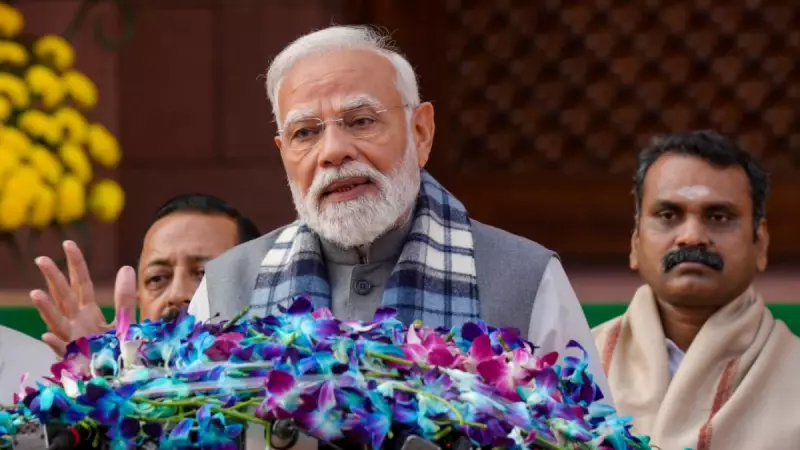
Prime Minister Narendra Modi has set an ambitious vision for the nation's immediate future, officially declaring the year 2025 as the 'Year of Transformative Reforms'. In a powerful address, he called upon every citizen to join this national mission and embark on what he termed the 'Reform Express', a journey aimed at accelerating India's path to becoming a developed nation.
A Vision for Accelerated Growth and Development
Outlining his vision, PM Modi emphasized that the coming year will be pivotal for implementing deep and impactful changes across various sectors of the economy and governance. The focus, he stated, will be on reforms that directly benefit the common citizen, enhance ease of living, and boost India's global competitiveness. He connected this forward-looking agenda with the foundation laid by his government over the past decade, suggesting that 2025 will be a period of harvesting the fruits of past policies while sowing seeds for an even brighter future.
The Prime Minister's message is clear: the momentum of change must not only continue but also intensify. He framed these upcoming reforms as essential building blocks for realizing the goal of a 'Viksit Bharat' or Developed India by 2047, the centenary year of India's independence. This declaration positions 2025 not as an ordinary year, but as a strategic inflection point in the country's development timeline.

Key Focus Areas and the 'Reform Express' Metaphor
While the Prime Minister's address was broad in its scope, it hinted at a comprehensive reform agenda. The metaphor of the 'Reform Express' signifies a fast-moving, unstoppable, and collective journey. It implies that reforms will be pursued with speed and determination, and that every sector and individual is expected to be on board.
Analysts anticipate that the reform push in 2025 will likely encompass several critical areas:
- Economic and Fiscal Reforms: Further simplification of tax regimes, enhancing the ease of doing business, and policies to attract greater foreign investment.
- Administrative Reforms: Leveraging technology to make governance more efficient, transparent, and citizen-centric.
- Social Sector Reforms: Initiatives aimed at improving healthcare, education, and skilling to empower the nation's youth and workforce.
- Infrastructure and Sustainability: Continued focus on next-generation infrastructure while integrating green energy and sustainability goals.
The Prime Minister's call is a rallying cry for all stakeholders – central and state governments, industry leaders, and the public – to align their efforts with this national objective. He stressed that the success of these transformative reforms depends on a whole-of-nation approach.
Building on a Decade of Change
PM Modi's announcement is seen as the next logical step in the government's reform trajectory. He reflected on the transformative changes India has witnessed since 2014, citing the widespread acceptance and success of earlier reforms as proof of the nation's readiness for deeper change. This past experience, he suggested, has created a robust platform and public confidence for the more ambitious reforms slated for 2025.
The declaration also carries significant political and economic messaging. It sets a clear agenda for the government's third term, providing a framework for policy direction. For investors and the global community, it signals policy continuity and a commitment to progressive economic management, which is crucial for long-term planning and investments in the Indian market.
In conclusion, Prime Minister Narendra Modi has effectively set the tone for 2025, raising expectations for a year of significant policy action. By branding it the 'Year of Transformative Reforms' and inviting the country onto the 'Reform Express', he has created a powerful narrative for accelerated national development. The coming months will be closely watched as the government translates this vision into concrete policies and actions aimed at shaping India's destiny.