Northeast Train Passengers Demonstrate Civic Responsibility in Viral Video
Cleanliness in public places frequently emerges as a pressing topic of discussion across India, with particular emphasis on the state of trains and railway stations. Complaints regarding litter and unhygienic conditions are widespread, often pointing fingers at systemic failures. However, a recent video originating from the northeastern region of India presents a compelling counter-narrative, highlighting that maintaining cleanliness is fundamentally rooted in individual habits and civic consciousness, rather than solely relying on regulations and enforcement.
Self-Regulated Cleanliness on the Aizawl–Guwahati Train
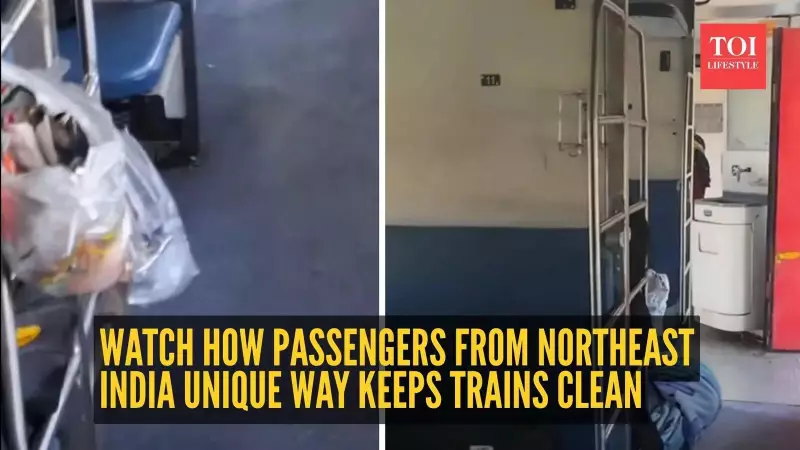
The video, shared on Instagram by the account @daily.passenger, captures a heartening scene aboard the Aizawl–Guwahati train. Passengers are observed meticulously handling their own waste, eschewing the common practice of discarding garbage indiscriminately. Instead, they placed their trash in small bags and kept these neatly near their seats. Notably, this behavior occurred spontaneously, without any announcements or instructions from railway staff. The individuals were simply adhering to the right practice autonomously, showcasing a proactive approach to public hygiene.
When Cleanliness Transforms into a Habit
The Instagram post accompanying the video eloquently described the moment: “People were tying their waste in small bags and hanging them neatly beside their seats. No announcements. No instructions from the railways. Just a habit.” For viewers across the country, this simple yet profound act resonated deeply because it exemplified responsibility and accountability without external supervision. It underscored a critical message: the upkeep of clean public spaces is a shared obligation between authorities and citizens, with personal discipline playing a pivotal role.

Personal Reflection and Broader Implications
The individual who shared the video offered a poignant personal reflection, stating: “As someone from North India, this made me reflect deeply. We often complain about dirty trains and roads but rarely question our own behavior. Clean spaces do not stay clean because of the authorities alone. They stay clean because people choose to care. There is so much to learn from Mizoram and the Northeast. Respect for public spaces is not a campaign. It is a way of life.” This introspection highlights a widespread tendency to externalize blame while neglecting self-assessment, urging a shift towards more conscientious civic behavior nationwide.
Social Media Applauds the Exemplary Conduct
The video rapidly gained viral traction, amassing widespread praise and thoughtful commentary from social media users. One user remarked, “There is so much to learn for all of us from our fellow Indians of the Northeast,” emphasizing the inspirational value of such actions. Another viewer pointed out the broader lesson, noting, “It's not about the area but the civic sense of people,” suggesting that geographical location is less relevant than cultivated civic values.
From Tamil Nadu, a user expressed appreciation while offering a constructive reminder: “This is great to see from them. I'm from Tamil Nadu. I appreciate that, and hopefully, it will be followed across India. I request one thing: that the trash be disposed of safely, instead of throwing it out on the tracks @irctc.official.” This comment underscores the importance of proper waste disposal methods to complement responsible collection.
Some viewers also recalled foundational lessons from their upbringing, sharing sentiments like, “We were told since childhood to carry our waste in our pockets or bags and throw it into a dustbin when we see one,” linking the observed behavior to timeless values instilled early in life.

The viral video serves as a powerful reminder that sustainable cleanliness in public domains hinges on collective civic responsibility and ingrained habits. It challenges the prevalent narrative of dependency on authorities, advocating for a cultural shift where every individual actively contributes to maintaining hygiene. As India continues to grapple with public cleanliness issues, such examples from the Northeast offer valuable insights and inspiration for fostering a more responsible and clean society across the nation.