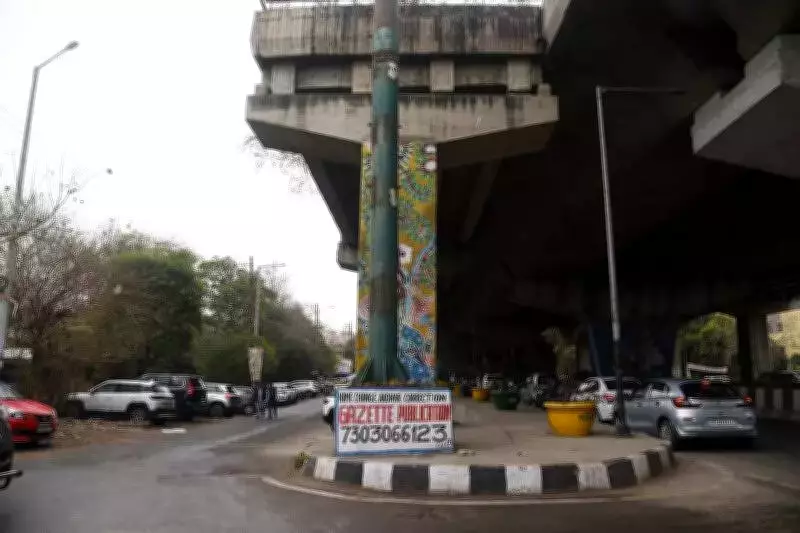
Noida DM Mandates Urgent Road Safety Measures at Over 150 High-Risk Locations
In a decisive move to enhance road safety, District Magistrate Medha Roopam has issued a strict directive to officials in Noida. She has ordered the installation of speed breakers, signage, traffic signals, and CCTV cameras at more than 150 accident-prone spots by February 25. This initiative is part of short-term corrective actions aimed at reducing fatalities on the roads.
Zero Tolerance for Delays in Zero-Fatality District Programme
Chairing the road safety and Zero-Fatality District (ZFD) review meeting on Tuesday, Roopam emphasized that all work must adhere to prescribed engineering norms. "There will be zero tolerance for delay or negligence, and accountability will be fixed department-wise," she stated firmly. This directive is a key component of Noida's efforts to enforce the ZFD programme, which was rolled out by Uttar Pradesh in 20 high-risk districts with the ambitious goal of halving road crash deaths by 2030.
Identification of Critical Crash-Prone Points and Black Spots
In November last year, the administration and police teams identified 152 critical crash-prone points across Noida. These include:

- Noida bypass flyover near Sector 23
- Sector 78 main road near Aditya Urban Casa
- Dadri main road near Surajpur roundabout
- Taj Highway near Tigri roundabout
- Bhardwaj road near Sector 68
The district road safety committee has been tasked with addressing these locations through phased short-, medium-, and long-term measures. Additionally, Noida has 35 accident black spots, which are critical stretches identified using the Integrated Road Accident Database (iRAD) from the Ministry of Road Transport and Highways. These spots, where high accident rates are recorded, include:
- Mahamaya Flyover
- Gijhor traffic intersection
- Sector 62 roundabout near Fortis Hospital
- Chaar Murti Chowk
- Zero Point on Yamuna Expressway
- Sector 14A gate near Chilla border
- Sector 21/25 cut
- Chaprola cut on NH-91
- Chipyana cut on NH24
Under the current system, a 500-meter stretch is classified as a black spot if it has experienced either five or more accidents involving fatalities or grievous injuries, or 10 deaths within a three-year period.
Long-Term Strategy and 4E Model Implementation
Roopam informed TOI that once the short-term measures are in place, departments will shift their focus to more comprehensive road engineering fixes. These include constructing flyovers, widening roads, and correcting culverts and U-turns. This will be complemented by stricter traffic enforcement and faster on-spot emergency response. "A meaningful reduction in road deaths is possible only through strict implementation of the 4E model—education, enforcement, engineering, and emergency care," the DM asserted, calling for inter-departmental convergence to align with state and national targets.
Additional Safety Initiatives and Accountability Measures
In addition to infrastructure upgrades, Roopam directed officials to widely publicise the cashless treatment scheme for road accident victims. This scheme offers up to Rs 1.5 lakh at empanelled hospitals, ensuring immediate care without delays. On school transport safety, she ordered intensive fitness checks, mandatory installation of CCTV and GPS systems, training for drivers and staff, and regular health screenings.
Roopam also highlighted the repeated absence of senior Authority and police officials at meetings, insisting on senior-level participation in the next review to ensure accountability and effective implementation of all safety measures.