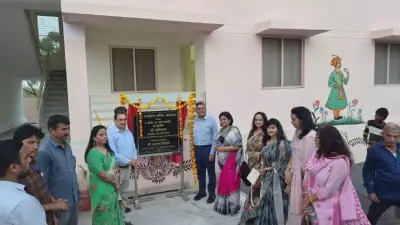
Pithoragarh: Around 2,000 Nepalese women married to locals in Pithoragarh district face uncertainty as the Special Intensive Revision (SIR) of electoral rolls begins in Uttarakhand, with door-to-door verification set to start on June 8. Many of these women are neither enrolled as Indian citizens nor able to access basic documents and welfare benefits after marriage.
Citizenship Process and Documentation Gap
The problem, according to residents and social workers, stems from the lengthy citizenship process and the documentation gap that follows cross-border marriages in the hills. Nepalese nationals married to Indian citizens can apply for Indian citizenship by registration under the Citizenship Act of 1955. However, social workers report that many women in border villages either do not know the process, lack the required documents, or surrender their Nepalese citizenship while waiting for Indian citizenship, leaving them without a secure legal identity during the interim period.
Personal Stories of Statelessness
Manisha Pande, who married Pithoragarh resident Vikrant three years ago, described her predicament: "My one-and-a-half-year-old daughter, born in India, is an Indian citizen, but I am stateless. I surrendered my Nepalese citizenship, but I have not got Indian citizenship." Her situation highlights the gap that leaves women without nationality even as their children have legal status in India.

Daily Life Consequences
Jagdish Kaloni, a social worker, explained the tangible impacts: "Without Indian citizenship, these women cannot get Aadhaar cards, and without Aadhaar, they struggle to open bank accounts, access ration schemes, and avail several government services." He added that many marriages have not been registered under the Uniform Civil Code (UCC), further complicating the process of proving marital status and applying for citizenship.
Widespread Issue in Border Districts
Kaloni emphasized that the issue is not limited to Pithoragarh alone but affects other border districts of Uttarakhand where cross-border marriages have long been part of social life. "This problem is not only of Pithoragarh but of other border districts as well. The Indian government must address it because these women are living here with families but remain invisible in the system," he said.
Voter Roll Revision Sharpens Concerns
The SIR exercise has sharpened concerns because voter-list inclusion is limited to Indian citizens. The Election Commission of India directed Phase-III SIR in 16 states and 3 Union Territories, including Uttarakhand, where the exercise covers nearly 79.8 lakh electors. The broader process includes house-to-house visits by booth-level officers.
Officials clarified that the roll revision would not by itself grant or deny citizenship, but only verify voter eligibility under election law. Additional District Magistrate of Pithoragarh, Yogendra Singh, stated: "Some people came to discuss SIR and the problems faced by Nepalese women. Only Indian citizens can be enrolled in the voter list, and Nepalese nationals can apply for citizenship according to law."