Outgoing Nagpur Commissioner Compares NMC Governance to Pulling Lord Jagannath's Rath
Nagpur: Outgoing municipal commissioner Abhijit Chaudhari has drawn a vivid analogy for running the Nagpur Municipal Corporation (NMC), comparing it to the monumental task of pulling Lord Jagannath's Rath. He emphasized that this massive undertaking moves forward only when all stakeholders collectively contribute their efforts.
Interacting with media representatives after his transfer to become commissioner of the Pune Metropolitan Region Development Authority on Thursday, Chaudhari reflected extensively on his tenure in the city. He described governing a large municipal body as involving continuous challenges that span from delivering basic services to ensuring long-term financial sustainability.
Collective Effort Essential for Municipal Governance
"Running the municipal corporation is precisely like pulling Lord Jagannath's Rath," Chaudhari stated emphatically. "It demands the unified and coordinated effort of the entire administration, elected representatives, media institutions, and most importantly, the citizens themselves."
Chaudhari expressed sincere gratitude toward political leaders, civic officials, and media professionals for their consistent support throughout his tenure. He specifically acknowledged the media's role in providing constructive feedback that enhanced governance quality.
"Whenever administrative mistakes occurred, the media promptly highlighted them, and when commendable work was accomplished, they offered their support," he noted. "This constructive interaction significantly contributed to improving overall governance standards."
Major Infrastructure and Environmental Initiatives
Detailing key initiatives undertaken during the past three years, Chaudhari revealed that the civic body successfully advanced several major infrastructure and environmental projects. These significant accomplishments included:
- Implementation of the comprehensive Nag River rejuvenation project
- Pollution abatement work conducted along the Pora River
- Flood mitigation measures implemented around Ambazari lake
- Accelerated cement concrete road construction throughout the city
- Development and improvement of public squares across various neighborhoods
Administrative Reforms and Employee Benefits
On the administrative front, the NMC achieved several notable milestones under Chaudhari's leadership:
- Completion of recruitment for approximately 500 employees after many years of delays
- Introduction of the National Pension System (NPS) for all staff members
- Increase in the civic body's contribution from 10% to 14% to ensure superior long-term benefits for employees
Significant Improvements in Civic Services
Chaudhari highlighted substantial enhancements in solid waste management, with the city's waste processing capacity expanding to approximately 1,400 tonnes per day. Centralized monitoring of garbage collection routes, along with expansion of vehicles and transfer stations, contributed significantly to improved operational efficiency.
Additional accomplishments included:
- Expansion of Akanksha schools across the municipality
- Procurement of new fire department equipment, including a 70-metre hydraulic platform for high-rise buildings
- Strengthening of disaster management capabilities
- Opening of several new health centres throughout the city
Persistent Structural Challenges Remain
Despite these achievements, Chaudhari candidly admitted that several structural challenges continue to confront the civic body. He identified improving the NMC's financial position as one of the most pressing concerns.
"Property tax collection requires substantial improvement, and the corporation must actively explore new revenue sources," he emphasized. "We initiated GIS-based mapping and AI-based assessment systems that could potentially identify additional properties and increase revenue generation."
He added that pilot projects utilizing these technologies have demonstrated encouraging preliminary results.
Street Vendor Management Presents Complex Challenge
The issue of street vendors represents another major administrative challenge for city officials. Chaudhari explained that accommodating all hawkers in designated zones would prove extremely difficult due to severe space constraints and competing urban development demands.
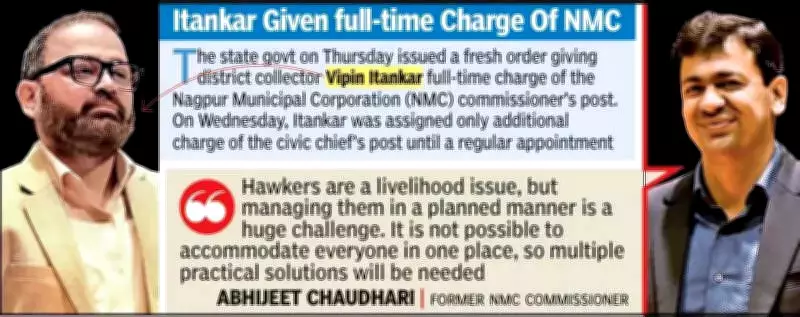
"Hawkers represent legitimate livelihood concerns, but managing them in a systematically planned manner presents enormous difficulties," he acknowledged. "Accommodating everyone in a single location remains impossible, necessitating multiple practical solutions tailored to different areas."
Reflections on Administrative Structure
Reflecting on the administrative framework during periods without an elected civic body, Chaudhari observed that this system enabled faster decision-making processes. However, he noted that an elected general body brings valuable broader consultation and essential local monitoring mechanisms.
"In a democratic system, elected representatives play crucial roles because they ensure wider participation in decision-making processes," he concluded, underscoring the importance of democratic governance structures in municipal administration.