

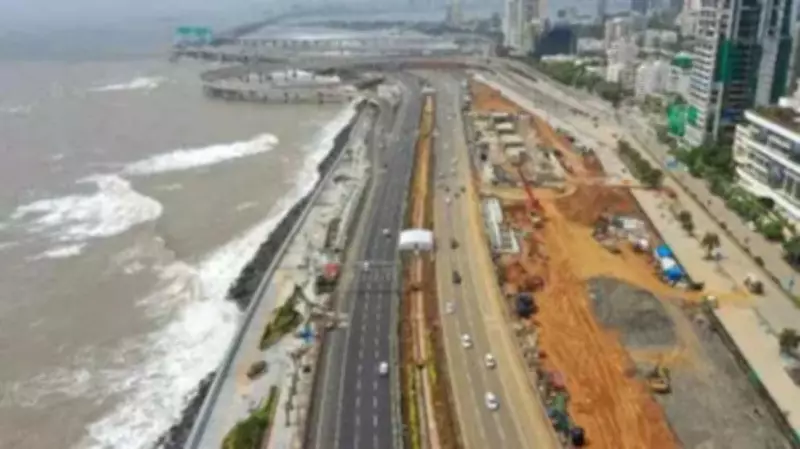
Mumbai Resident's Persistent PMO Correspondence Yields Detailed Coastal Road Response
Seven months after initiating correspondence with the Prime Minister's Office, Breach Candy resident Nigum Lakhani has finally received a comprehensive reply from authorities regarding his concerns about access to Mumbai's Coastal Road from Nepean Sea Road. Lakhani, who resides opposite the Mumbai Coastal Road interchange, had expressed frustration that demands for an additional exit were being passed between departments without resolution.
The Journey of Correspondence
Lakhani first wrote to the PMO on August 8, 2025, detailing his concerns about the lack of proper access from Nepean Sea Road to the Coastal Road infrastructure. His letter subsequently traveled through multiple government channels, first reaching state government authorities before finally arriving at the Brihanmumbai Municipal Corporation (BMC) offices. This bureaucratic journey eventually compelled BMC officials to provide a detailed response addressing the specific concerns raised by the concerned resident.
Official Response Reveals Administrative Hurdles
The official reply states that the BMC is currently awaiting clearance from the Public Works Department (PWD) regarding the Nepean Sea Road access to the Coastal Road project. According to the correspondence, Municipal Commissioner of BMC issued a letter on December 26, 2025, to the Additional Chief Secretary of PWD following directions from the Chief Minister conveyed through a letter dated December 1, 2025.

The BMC has specifically requested the handover of a 10.5-meter-wide land strip from the Maharashtra State Road Development Corporation (MSRDC) to the Coastal Road Department of BMC. This land is essential for constructing an access road along Embassy Apartments within the MSRDC plot at Nepean Sea Road. The proposed infrastructure would enable two critical functions:
- Exit from the Coastal Road to Nepean Sea Road
- Public access to the Green Space and Promenade developed under the Coastal Road Project
However, the response notes that no reply has been received to date from either the Additional Chief Secretary (PWD) or the Vice Chairman and Managing Director of MSRDC regarding these requests.
Historical Planning and Design Evolution
The detailed reply also sheds light on the historical planning of the Coastal Road project. Early planning documents, including a Joint Technical Committee report from 2011, had originally envisaged an entry and exit point near Priyadarshini Park. This design would have connected the coastal road tunnel emerging from beneath Malabar Hill to Nepean Sea Road using reclaimed land.
As the project evolved, consultants examined seven alternative design options which were presented before the Maharashtra Coastal Zone Management Authority (MCZMA). Based on environmental observations and technical recommendations, Option 7 was ultimately finalized. This design provides interchanges only at three locations:
- Amarsons Garden
- Haji Ali
- Worli
The Amarsons Garden interchange, also referred to as the Tata Garden interchange, was designed as a trumpet-type interchange to efficiently manage traffic from Bhulabhai Desai Marg (Warden Road). This infrastructure serves key areas including Kalbadevi, Girgaon, Bhuleshwar, Malabar Hill, and Kemps Corner.
Land Availability and Legal Considerations
The civic body explained that the interchange location was shifted from Nepean Sea Road to Amarsons Garden primarily due to land availability constraints. The BMC also referenced a Bombay High Court order dated July 16, 2019, which upheld the decision to locate the interchange at Amarsons Garden.
In its judgment, the court stated that shifting the interchange northwards, as demanded by petitioners, would have necessitated the acquisition of private land from residential buildings such as Vaibhav Apartments and Lincoln House. Additionally, such a shift would have obstructed access to a hospital and a school located in the vicinity, making the Amarsons Garden location the more practical and legally sound choice.

This detailed response marks a significant development in the ongoing dialogue between Mumbai residents and infrastructure authorities, highlighting both the complexities of urban planning and the importance of persistent civic engagement in addressing community concerns about major development projects.





