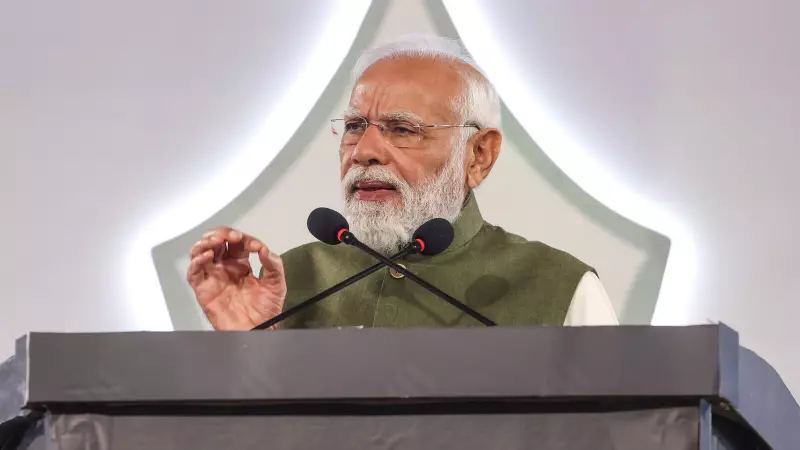
In a landmark decision set to reshape India's employment landscape, Prime Minister Narendra Modi announced the implementation of four comprehensive labour codes on Friday, November 21, 2025. Hailing it as a historic step, the Prime Minister declared this move as one of the most significant pro-worker reforms since the country gained independence.
A New Dawn for India's Workforce
Through an official post on the social media platform X, Prime Minister Modi introduced the new labour codes to the nation. He emphasized that the reforms are designed to greatly empower the workers of India while simultaneously creating a more streamlined and business-friendly environment. The announcement marks the culmination of a long-pending legislative process aimed at modernizing the country's complex labour laws.
The Prime Minister's message, which began with the powerful phrase "Shramev Jayate," underscored the government's dual focus. The primary goals are worker empowerment and the simplification of compliance norms for businesses, both large and small. This balanced approach seeks to protect employee rights while promoting industrial growth and investment.

Simplifying Compliance and Boosting Business
The newly enacted labour codes represent a massive consolidation and rationalization of numerous existing laws. For decades, businesses in India have navigated a labyrinth of overlapping regulations, which often acted as a barrier to growth and formal job creation. The new framework significantly simplifies compliance, directly promoting the 'Ease of Doing Business' initiative championed by the government.
This simplification is expected to reduce the administrative burden on companies, allowing them to focus more on expansion and innovation. For workers, the codes promise a more transparent and secure ecosystem, with clearer rights and potentially faster grievance redressal mechanisms.
Progressive Empowerment for Millions
By describing the reform as "progressive," the government signals a forward-looking approach to labour welfare in the modern economy. The codes are anticipated to extend social security benefits to a larger segment of the workforce, including those in the unorganized sector. This is one of the most comprehensive overhauls of labour laws in India's history, impacting millions of employees and employers across the nation.
The Ministry of Labour and Employment, which spearheaded this initiative, has effectively brought a new structure to the fore. As this is a developing story, further details regarding the specific provisions and the implementation timeline of the four codes are awaited. The move is poised to set a new benchmark for labour relations and economic governance in India for years to come.