A quiet but powerful revolution is sweeping across rural India, led by women at the helm of local governance. From ensuring equal wages to fostering green economies, these leaders are redefining development from the ground up. A recent national workshop highlighted several such beacons of change, showcasing a new blueprint for inclusive and sustainable village life.
A Historic Step for Equality in Arjuni
The transformation began with a fundamental question of fairness. In Arjuni village of Kagal taluka, Kolhapur district, where agriculture is the mainstay, women have long performed the same arduous tasks as men—sowing, weeding, harvesting—yet consistently received lower wages. This entrenched norm was challenged and overturned in a landmark decision.
During a gram sabha meeting, the community collectively acknowledged this injustice. They passed a resolution mandating that equal pay for equal work must be the standard whenever men and women perform identical agricultural labour. Crucially, the Arjuni Gram Panchayat moved beyond paper promises to ensure strict on-ground implementation.

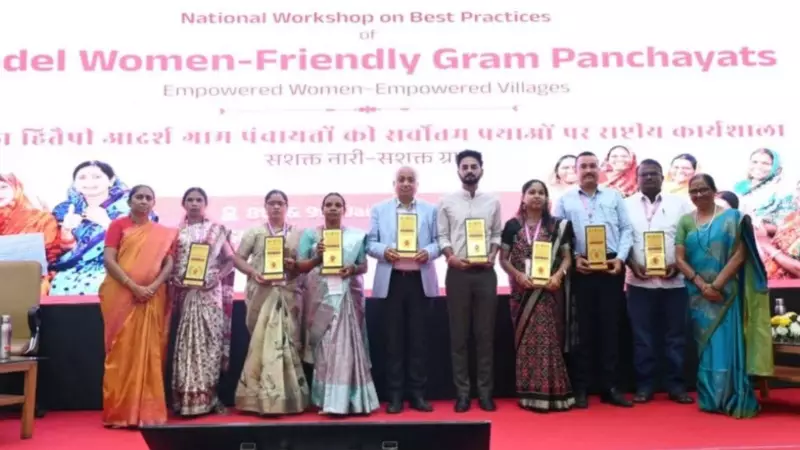
Pravinsinh Prakash Sulkude, the gram panchayat officer, noted that for years, lower wages were an accepted norm for women. "This resolution has restored a sense of dignity to their labour," he stated. The village's sarpanch, Bapu Rama Yadav, emphasized the change in mindset: "Now women's work is valued equally. It motivates them to work with pride." This decisive action earned Arjuni recognition as a model women-friendly gram panchayat at the national workshop held on January 8 and 9 at YASHADA, organized by the Ministry of Panchayati Raj.
Economic Empowerment and Sustainable Livelihoods
While Arjuni tackled wage parity, other panchayats are building robust, women-centric local economies. Narada Gram Panchayat in Bhadrak district, Odisha, stands out as a stellar example. Here, women are the undisputed engines of economic growth through highly participatory governance.
The panchayat has strategically strengthened livelihoods by nurturing 113 women's Self Help Groups (SHGs), engaging over 1,100 women. These groups are active in diverse sectors including animal husbandry, poultry, mushroom cultivation, fisheries, dairying, and handicrafts. By providing continuous skill training, facilitating access to institutional credit, and creating convergence with various government schemes, the panchayat has successfully boosted rural entrepreneurship. Furthermore, women are leveraging digital platforms to access wider markets, making Narada a benchmark for sustainable, women-led development.
Holistic Development: Health, Dignity, and Waste Wealth
The model extends to holistic well-being and environmental stewardship. Parule Bazar Gram Panchayat in Vengurla taluka, Sindhudurg district, Maharashtra, has made women's health and dignity a cornerstone of its agenda. The panchayat facilitated the construction of individual household toilets and installed sanitary pad vending machines at multiple village locations. It conducts regular health check-ups for women and adolescent girls, with ongoing efforts to make the village anaemia-free.
Environmental sustainability is another key pillar. The panchayat has established greywater treatment projects, compost pits, and vermicomposting units for effective waste management. In a remarkable initiative to create wealth from waste, the panchayat, with support from the Coir Board, helped set up the Yesu Akka Kathya Industry—a project worth approximately Rs 1 crore. Operated by women's SHGs, this unit manufactures products like cocopeat, kathya, ropes, mats, and decorative items from coconut waste.
This enterprise has been transformative. After covering all expenses, the SHGs earn a stable monthly income. It is estimated that nearly 90% of the village's women have achieved financial self-reliance through this Kathya industry, turning an environmental challenge into an economic opportunity.

The challenges of urbanization were also discussed at the workshop. Shanmukha Srinivas Pinnapareddy, a panchayat development officer from Davuluru grama panchayat in Andhra Pradesh, highlighted solid waste management as a major hurdle. His panchayat has proposed innovative solutions like village-level thermal plants to reduce carbonization. They have also rejuvenated a 100-year-old pond under the Azadi ka Amrit Sarovar scheme using the NREGA convergence program, with plans for a walking track and a Miyawaki model biodiversity ecosystem around it.
The stories of Arjuni, Narada, and Parule Bazar are not isolated incidents. They represent a growing wave of grassroots governance where women leaders are not just participants but architects of a new rural India—one that is equitable, prosperous, and in harmony with nature. Their collective journey from demanding equal wages to engineering green growth charts a compelling path for the future of the country's villages.