Dwarka Expressway Residents Demand Feeder Bus Services to Metro, Cite Connectivity Crisis
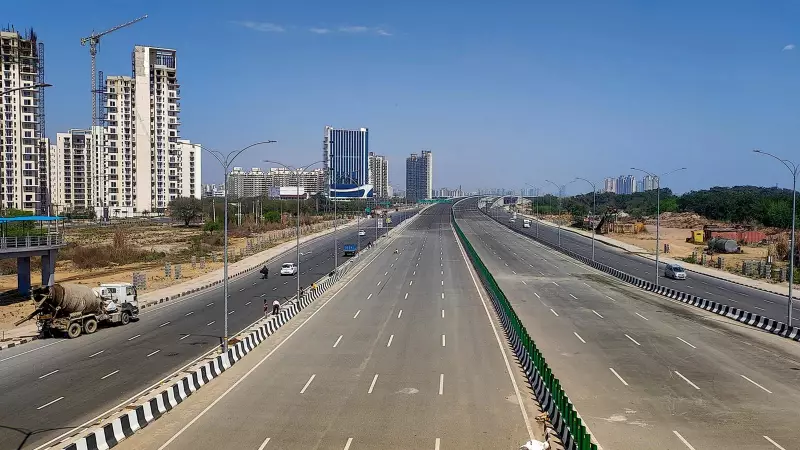
Residents living along the Dwarka Expressway in Gurgaon have intensified their push for dedicated feeder bus services to connect with major Delhi Metro stations. This move comes as a response to what they describe as poor public transport connectivity, escalating cab fares, and worsening traffic congestion in the rapidly developing corridor.
Formal Appeals to Government Authorities
The Dwarka Expressway-Gurugram Development Association (DXP-GDA) has written letters dated January 14 and 17 to top government officials, including Haryana Chief Minister Nayab Singh Saini, Delhi Lieutenant Governor V K Saxena, Delhi Chief Minister Rekha Gupta, Prime Minister Narendra Modi, and Gurgaon MP Rao Inderjit Singh. These communications highlight the urgent need for scheduled bus services to link various city sectors with metro nodes such as Sector 21 and Yashobhoomi (IICC) stations.
In their appeal, the association emphasized that despite significant development of housing societies, offices, schools, and healthcare facilities along the expressway, last-mile and intercity public transport options remain severely inadequate. This deficiency forces thousands of daily commuters to depend on private vehicles, app-based cabs, or informal transport modes.

Impact on Commuters and Environment
The lack of efficient bus services has led to multiple challenges:
- Severe congestion on service roads and arterial junctions
- Increased travel time and commuter hardship
- Higher vehicular emissions contributing to worsening air quality
- Disproportionate impact during traffic restrictions and pollution-control measures
DXP-GDA Deputy Convenor Sunil Sareen explained, "After toll was levied recently, cab fares to Dwarka have increased significantly. The expressway is the only motorable road connecting us to Delhi and Gurgaon. Even school buses face monthly toll charges of Rs 60,000, costs ultimately passed to residents. The working population remains dependent on taxis."
Broader Public Transport Challenges in West Gurgaon
The residents' demands have brought to light ongoing public transport issues in west Gurgaon. Prakash Lamba, RWA president of Sector 21 in Old Gurgaon, noted, "One has to take multiple e-rickshaws to reach Sikanderpur, the nearest metro station. We wrote to authorities three months ago but received no response." This situation persists despite the area being just 4 kilometers from Cyberhub.
The association also recalled that during the expressway's launch, Union Minister Nitin Gadkari had promised electric bus services, a commitment that has yet to materialize.
Current Public Transport Infrastructure and Future Plans
The Gurugram Metropolitan City Bus Limited (GMNCL), operating under the Gurugram Metropolitan Development Authority (GMDA), currently manages a fleet of 150 buses across the city. Recent developments include:
- Announcement of adding 200 electric buses late last year
- Signing of an MoU with Plaksha University on January 1 for bus route optimization projects
- GMDA CEO P C Meena's December 16 directive to identify new routes for expanded city bus services
Residents argue that without a robust public bus network integrated with the metro system, the Dwarka Expressway cannot achieve its full potential as a sustainable urban corridor. They specifically seek regular, time-bound electric bus services to support sustainable urban development and reduce reliance on private transportation.