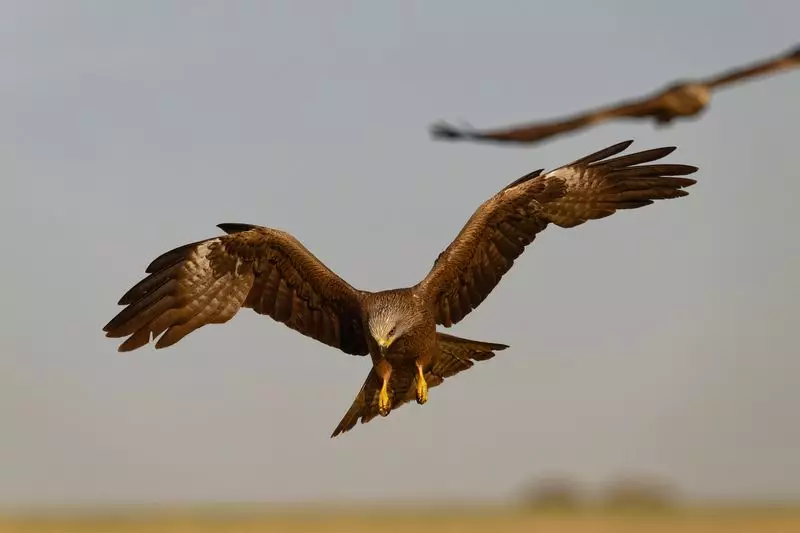
In an innovative move to ensure the safety and smooth execution of the Republic Day flypast, the Delhi government has implemented a unique feeding strategy focused on the capital's population of black kites. The plan involves the strategic distribution of a substantial amount of chicken meat to keep these birds of prey away from the critical air corridor.
The Scale of the Operation
The Delhi Forest and Wildlife Department has been tasked with this crucial operation. Their mission is to distribute a total of 1,275 kilograms of chicken meat across multiple feeding sites. This initiative is not a last-minute effort but a carefully timed operation. The feeding program commenced on January 24 and will continue through the main event on January 26, ensuring the birds are satiated and less likely to venture into the path of the high-speed aircraft.
The primary objective is to create a distraction zone for the kites. By providing ample food at designated ground locations, authorities aim to keep the birds at lower altitudes and away from the airspace where the Indian Air Force's formidable fleet, including Rafale fighter jets and Apache attack helicopters, will be performing. A bird strike, especially with large raptors like black kites, poses a severe risk to aircraft during low-altitude flypasts.

Coordinated Efforts for Aerial Security
This feeding plan is part of a larger, multi-agency effort to sanitize the skies along the Republic Day parade route. The Delhi government's strategy works in tandem with the actions of the Indian Air Force (IAF) and other agencies. While the ground teams lay out chicken feasts, the IAF is deploying its own proven deterrents.
This includes the use of bio-acoustic systems and laser beams to disorient and scare away birds from the flight path. The combination of ground-based feeding (attraction) and aerial deterrence (repulsion) creates a comprehensive bird hazard management system. The focus area for these efforts is the airspace above and around Kartavya Path and the adjoining regions, which form the central stage for the Republic Day celebrations.
Why Target Black Kites?
The specific focus on black kites (Milvus migrans) is due to their significant presence in the urban ecosystem of Delhi. These scavenging raptors are abundant in the city and are known to soar at heights that intersect with the flight levels of aircraft during the meticulously choreographed air show. Their size and weight make them a particularly dangerous hazard for jet engines and canopies.
This is not the first time such a method has been employed. The Delhi authorities have used controlled feeding as a preventive measure during major national events in the past, including previous Republic Day parades and Independence Day ceremonies. The tactic has proven effective in minimizing bird activity in the sensitive zones during the critical hours of the aerial display.
Ensuring a Spectacular and Safe Celebration
The ultimate goal of this unusual but vital operation is to guarantee a seamless and secure aerial spectacle for the nation. The Republic Day flypast is a highlight of the celebrations, showcasing India's military prowess and aviation technology. Any interruption or accident due to wildlife can have catastrophic consequences.
By investing in this 1,275 kg chicken meat plan, the Delhi government and the Forest Department are taking a proactive, non-lethal approach to wildlife management. It underscores the detailed planning that goes into every aspect of the national event, where even the behavior of local bird populations is factored into the security and operational blueprint. The success of this plan will contribute to millions of citizens and dignitaries witnessing a flawless and awe-inspiring display in the skies of the capital.