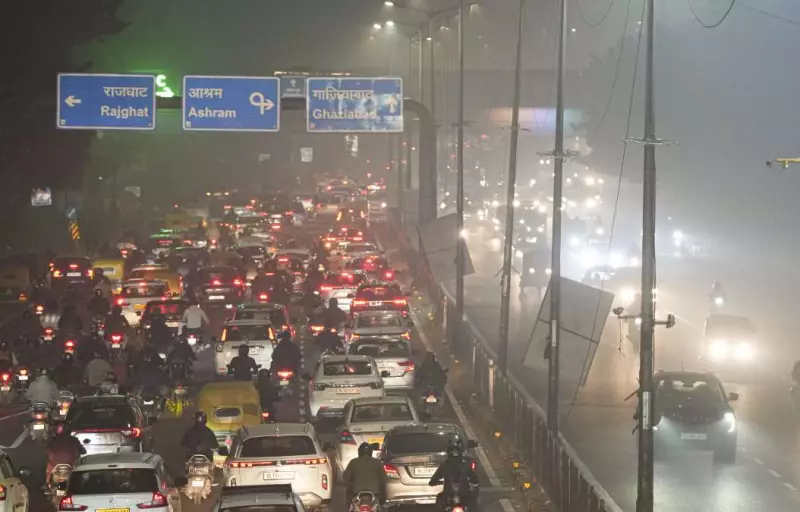
In a decisive move to combat the severe air pollution that frequently engulfs the national capital, the Delhi government has announced a significant policy change. Parking fees across the city are set to double during periods when the Graded Response Action Plan (GRAP) stages 3 and 4 are enforced. This measure aims to directly tackle one of the primary sources of pollution: vehicular emissions.
Understanding the GRAP Framework and Its Implications
The Graded Response Action Plan is a comprehensive set of emergency measures activated progressively as air quality deteriorates. Stages 3 and 4 represent 'severe' and 'severe plus' air quality levels, respectively. During these critical phases, authorities implement stringent actions to protect public health and mitigate environmental damage.
Rationale Behind the Parking Fee Hike
The decision to increase parking fees by 100% is rooted in a clear environmental strategy. By making parking more expensive during high-pollution alerts, the government intends to discourage the use of private vehicles. This reduction in traffic volume is expected to lead to a corresponding decrease in tailpipe emissions, which are a major contributor to Delhi's hazardous particulate matter levels.

Officials have emphasized that this step is part of a broader, multi-pronged approach to improve air quality. It complements other GRAP measures such as restrictions on construction activities, enhanced public transport services, and the possible implementation of odd-even vehicle rationing schemes.
Operational Details and Public Response
The doubled parking fees will apply to all public and private parking facilities within Delhi's jurisdiction once GRAP 3 or 4 is officially declared. The hike is temporary and will be rolled back once air quality improves and the higher GRAP stages are deactivated.
While environmental activists have largely welcomed the move as a necessary deterrent, some commuters and business owners have expressed concerns. They argue that the increased cost could burden daily travelers and potentially affect commercial activities in areas reliant on customer vehicular access.
Long-Term Vision for Sustainable Mobility
Beyond the immediate pollution control objective, this policy is seen as a nudge towards promoting sustainable transportation alternatives. The Delhi government is concurrently working on expanding the metro network, increasing the fleet of electric buses, and improving last-mile connectivity. The hope is that higher parking costs during pollution peaks will incentivize a shift to public transport, carpooling, cycling, or walking.
This announcement underscores the administration's commitment to treating air pollution as a public health emergency requiring urgent and sometimes disruptive interventions. As Delhi continues to grapple with its air quality crisis, such targeted financial disincentives for private vehicle use are likely to become a more common feature of the city's environmental governance toolkit.