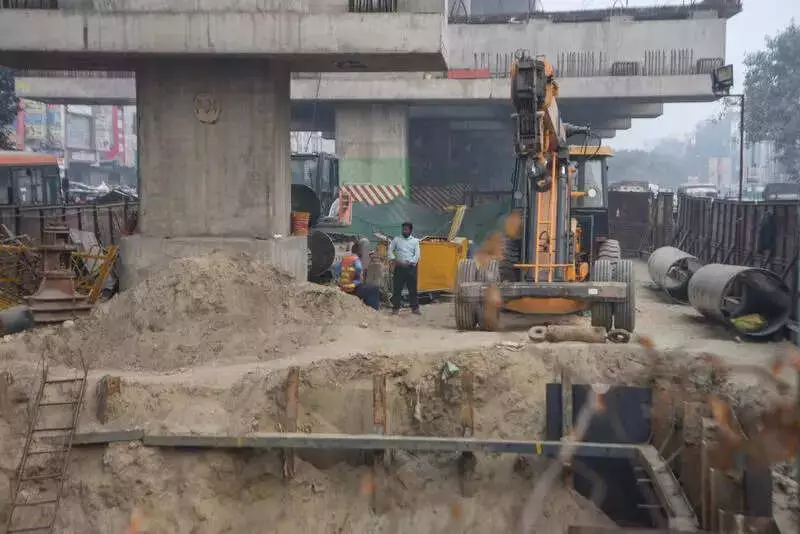
The Delhi government has significantly increased its capital expenditure for the current fiscal year, injecting an additional Rs 2,132 crore into key infrastructure projects. This move, part of the revised budget estimates for 2025-26, signals a strong push to accelerate long-pending works that directly impact public life, from metro connectivity to water supply and road decongestion.
Major Allocations for Transport and Civic Bodies
The revised estimates, presented by Chief Minister Rekha Gupta in the assembly through the Delhi Appropriation Bill, see massive infusions for major corporations. The Delhi Metro Rail Corporation (DMRC) receives the largest chunk, with an extra Rs 2,117 crore, taking its total allocation beyond the Rs 5,000 crore mark. This funding is aimed at fast-tracking the network's ongoing expansion and supporting new stretches.
Similarly, the Delhi Transport Corporation (DTC) gets an additional Rs 653 crore to strengthen the public bus network, underscoring the government's focus on improving mass transit. For civic governance, the Municipal Corporation of Delhi sees an increase of Rs 1,031 crore to enhance essential services like sanitation, waste management, and urban infrastructure.

Push for Long-Pending Projects and Environmental Focus
A core objective of the revised budget is to unblock stalled infrastructure initiatives. A notable allocation is Rs 100 crore for completing the Barapulla Phase-III elevated corridor. This long-awaited project will connect Mayur Vihar to AIIMS, enabling signal-free travel from east and south Delhi and helping decongest major stretches.
Environmental commitment is reinforced with an extra Rs 180 crore earmarked for the Yamuna cleaning programme, a flagship initiative. The efforts include enhancing sewage treatment capacity, deploying modern wastewater technologies, and monitoring industrial effluents. Last year, the government cleared Yamuna projects worth Rs 3,140 crore, including 27 decentralised sewage treatment plants.
Broader Infrastructure and Sectoral Enhancements
The revised budget reflects a calculated shift towards capital creation. While the overall budget remains unchanged at Rs 1 lakh crore, capital expenditure has risen to Rs 30,247.56 crore from the original Rs 28,115.48 crore. Correspondingly, the revenue budget was reduced from Rs 71,884.52 crore to Rs 69,752.44 crore.
Other significant allocations include:
- Rs 1,000 crore in loans to the Delhi Jal Board for better water supply and new sewerage projects.
- Road infrastructure spending nearly doubles to Rs 996 crore to improve quality and ease traffic bottlenecks, aiding in curbing vehicular pollution.
- An additional Rs 128 crore for developing unauthorised colonies.
- The education sector allocation rises to Rs 20,702 crore, including Rs 862 crore for land and flats for universities and modernising higher-education infrastructure.
A government official stated that the increased capital budget is strategically aimed at accelerating delayed projects, easing traffic congestion, improving public transport, and strengthening the city's urban backbone. The Delhi Appropriation Bill was passed by a voice vote in the assembly, greenlighting these supplementary grants.