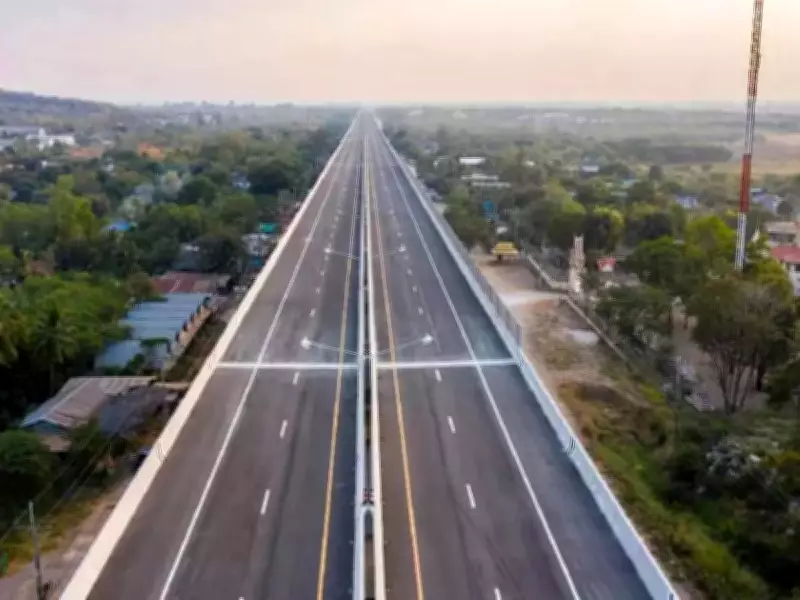
Centre Moves to End Speed Limit Confusion on National Highways
In a significant move to eliminate widespread confusion among commuters regarding speed restrictions on national highways and expressways, the road transport ministry has proposed a clear division of authority. The proposal suggests that the central government should have the exclusive power to set speed limits on national highways and expressways, while state governments would retain jurisdiction over all other roads within their territories.
Addressing Ambiguities and Compliance Issues
The ministry recently shared a series of proposed amendments aimed at resolving ambiguities surrounding speed limits that are often imposed by state governments and local police on national highways. Currently, while the road transport ministry notifies the maximum speed limits for all road categories, state agencies frequently reduce these limits on national highway stretches passing through urban areas, typically lowering them from 100 kmph to 60-70 kmph.
This practice has led to significant compliance issues for commuters, particularly those who do not frequently use national highways and fail to notice the altered speed signs. As a result, many drivers inadvertently exceed the reduced limits and end up paying fines, creating frustration and confusion.

Proposed Amendments to the Motor Vehicles Act
To bring clarity and uniformity, the ministry proposes amending Section 112 of the Motor Vehicles Act, which currently empowers state governments to set both minimum and maximum speed limits. Under the new proposal, this authority would be specifically delineated: the central government would set norms for national highways, while states would manage speed limits for their own roads.
Additionally, Section 113 of the Act, which allows states to regulate, restrict, or prohibit vehicle use based on weight, would also be amended to align with this new framework. Officials familiar with the plan emphasize that these changes will address the compliance challenges faced by commuters.
Legal Basis and Implementation
An official explained that under the Control of National Highways (Land and Traffic) Act, highway administrations appointed by national highway agencies already have the authority to control land, manage traffic, and remove unauthorized occupations on highways. Therefore, centralizing speed limit authority for national highways is a logical extension of existing powers and will eliminate confusion.
The proposed system aims to create a streamlined approach where commuters can rely on consistent speed regulations on national highways, regardless of state boundaries, while states maintain autonomy over local road networks. This move is expected to enhance road safety, reduce inadvertent violations, and improve overall traffic management across the country.