

CAG Report Uncovers Critical Flaws in Gujarat's Automated Driving Test Infrastructure
The Comptroller and Auditor General of India has issued a damning report highlighting severe deficiencies in the automated driving test tracks operated by Regional Transport Offices across Gujarat. According to the findings, electronic sensors installed at these tracks in seven RTOs were either damaged or completely inoperable, raising serious concerns about the reliability of driving assessments in the state.
Widespread Sensor Failures and Manual Monitoring
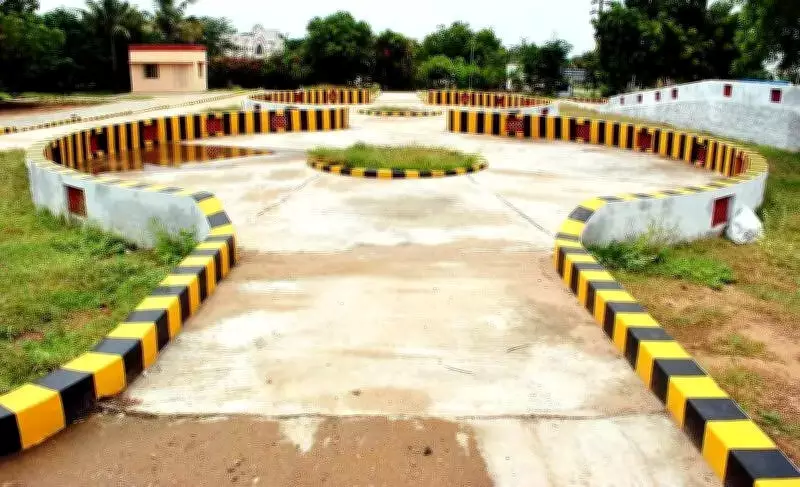
In its report tabled in the state assembly, the CAG emphasized that a well-designed and properly maintained testing track is essential for administering accurate driving tests. An Automated Driving Test Track is a fully computerized system equipped with electronic sensors to measure a driver's skills and record their movements during the examination process.
As of March 2024, Gujarat had 22 ADTTs for light motor vehicles and 23 for two-wheelers operational across 23 RTOs. However, in seven out of nine RTOs and Assistant Regional Transport Offices, including major cities like Ahmedabad and Surat, the sensors on both two-wheeler and LMV test tracks were found to be non-functional. This critical failure forced RTO staff to resort to manual monitoring through visual inspection to determine if vehicles had touched boundaries or barriers during tests.

Transport department officials attributed the sensor issues to an expired maintenance contract with the agency responsible for their upkeep. Consequently, duty inspectors were relying on cameras and a radio-frequency identification system to monitor tests, failing candidates if they touched sensor poles—a method that lacks the precision of automated systems.
High Failure Rates and Infrastructure Gaps
The CAG report noted that the only consistently functional aspect of these systems was the time-tracking feature for each test stage. An officer involved revealed that sensor poles at multiple locations were damaged, with no repair work undertaken due to the absence of an assigned agency. In Ahmedabad, failure rates were alarmingly high: 15% for two-wheeler riders and 53% for four-wheeler drivers.
Furthermore, the report disclosed that approximately eight RTOs in Gujarat still lack ADTTs entirely, continuing to use outdated systems for driving tests. This infrastructure gap undermines efforts to standardize and modernize driver licensing processes across the state.
Additional Deficiencies in Testing Facilities
The CAG audit uncovered other significant shortcomings. RTOs in Sabarkantha, Rajkot, Kheda-Nadiad, Gir-Somnath, and Jamnagar did not have separate rooms or halls with functional systems for displaying tutorial videos, which are crucial for driver education. Additionally, face-recognition cameras were either not installed or were inoperative in seven RTOs, excluding Ahmedabad and Vadodara.
In response to these findings, the transport commissioner stated in September 2025 that an agreement had been executed in February 2025 with a vendor to modernize ADTTs using video analytics technology. Civil structure work has been completed in Ahmedabad and Rajkot, while land acquisition is ongoing in Bardoli.
Future Plans for AI Monitoring
Hareet Shukla, Principal Secretary of Ports and Transport, announced ambitious plans to address these issues. "By the end of the year, all the test tracks will be AI-monitored," Shukla stated, indicating a shift towards more advanced and reliable testing mechanisms. This move aims to enhance the accuracy and fairness of driving tests, potentially reducing failure rates and improving road safety standards.
The CAG's revelations underscore the urgent need for infrastructure upgrades and stricter maintenance protocols in Gujarat's driving test system. As the state moves towards AI integration, ensuring the functionality of existing equipment remains a critical priority for transport authorities.






