

Bhopal Confronts Deepening Water Scarcity Crisis
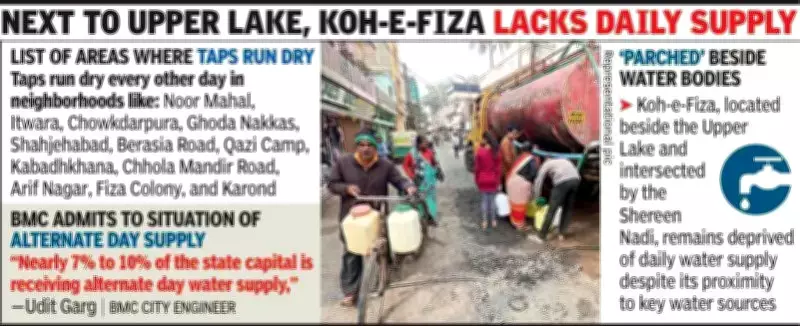
The state capital of Madhya Pradesh is experiencing a severe water shortage, with municipal authorities confirming that approximately 10% of the city's population now receives water supply only on alternate days. This alarming situation has created significant hardship for residents across multiple neighborhoods.
Official Confirmation of Worsening Conditions
According to BMC City Engineer Udit Garg, between 7% and 10% of Bhopal's urban area is currently dependent on alternate-day water distribution. This official acknowledgment comes despite repeated budget promises of increased allocations and new pipeline infrastructure projects aimed at addressing the city's water challenges.
Paradoxical Scarcity in Water-Rich Areas
One of the most striking aspects of this crisis is its impact on areas located near significant water sources. Koh-e-Fiza, situated beside the Upper Lake and intersected by the Shereen Nadi, continues to suffer from inadequate daily water supply despite its geographical advantages. This paradox highlights systemic distribution failures within the municipal water network.

Daily Struggles in Affected Neighborhoods
In Arif Nagar, residents describe increasingly difficult conditions as summer intensifies. Children gather around sunset with steel buckets, waiting for the municipal supply to begin flowing through pipes. "The situation has deteriorated during the hottest months," explained one local resident. "Even with the alternate-day schedule, the actual supply duration has been substantially reduced."
Families across affected areas have developed meticulous water rationing systems. Mothers make difficult daily decisions about whether to allocate precious drops for cooking, cleaning, or saving for future needs. In Chowkdarpura, shopkeepers resort to using bottled water for basic cleaning tasks, while in Koh-e-Fiza, families coordinate around shared storage tanks to make their 48-hour water allocation last.
The Invisible Divide in Water Access
The water crisis reveals a stark urban divide. While offices in the city center operate normally with air conditioning systems, and restaurants serve chilled beverages without interruption, the struggle for basic water access remains largely invisible to privileged residents. However, in neighborhoods like Kabadhkhana and Berasia Road, the alternate-day water schedule dictates fundamental aspects of daily survival.
The scarcity has become so integrated into community life that social events in some areas, including Shahjehanbad, are now scheduled around water supply availability rather than traditional considerations.
Community Resilience Amid Adversity
Despite the challenging circumstances, remarkable examples of community solidarity have emerged. In Fiza Colony, neighbors share stored water resources, transforming scarcity into an opportunity for mutual support. Meanwhile, in Ghoda Nakkas, women actively teach children water conservation practices, emphasizing the sacred value of every single drop.
The water crisis in Bhopal represents more than just infrastructure failure—it has become a test of urban resilience and community spirit as residents navigate increasingly limited water resources during peak summer months.






