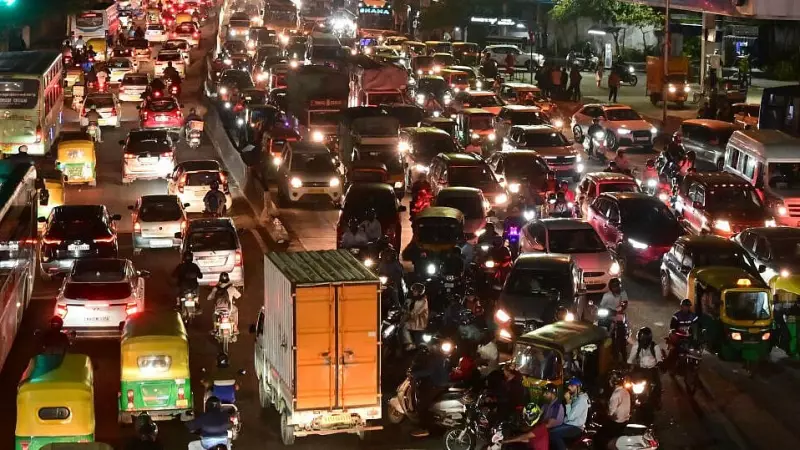
The perennial traffic nightmare plaguing Bengaluru has a clearly identified culprit, according to recent analyses. At the core of the city's relentless congestion lies an antiquated and poorly coordinated traffic signal system. This fragmented infrastructure is failing to keep pace with the explosive growth in vehicle population, turning daily commutes into hours-long ordeals.
The Root of the Congestion: A System Stuck in the Past
Experts point out that the traffic signal infrastructure across India's Silicon Valley is not just old, but also operates in isolation. Signals often lack centralised, intelligent coordination, meaning they do not communicate with each other to create smooth "green corridors" for moving traffic. This results in vehicles stopping at every intersection, even on major arterial roads, drastically reducing average speeds and increasing fuel consumption and pollution.
The problem is compounded by the fact that the system was designed for a much smaller vehicular volume. Bengaluru's vehicle registration numbers have skyrocketed over the past two decades, overwhelming a network that was never upgraded holistically. The consequence is a daily traffic gridlock that affects productivity, quality of life, and the city's economic vitality.

Beyond Signals: The Ripple Effects of Poor Management
The impact of this outdated setup extends far beyond mere inconvenience. The stop-start driving pattern increases vehicular emissions significantly, worsening the city's air quality. The economic cost, in terms of lost man-hours and wasted fuel, runs into crores of rupees every day. Furthermore, the stress endured by commuters contributes to a public health issue, raising frustration levels and affecting mental well-being.
Emergency services like ambulances and fire engines are also severely hampered, with life-saving minutes being lost in snarls. This highlights how a failing urban traffic management system can have critical, real-world consequences for citizen safety.
The Path Forward: Integration and Intelligence
The solution, as outlined by urban planners and traffic experts, hinges on a complete technological overhaul. The city needs a unified, adaptive traffic control system that uses real-time data from sensors and cameras to optimise signal timings dynamically. Such intelligent systems can respond to changing traffic patterns throughout the day, easing flow during peak hours and coordinating signals across large zones.
Successful implementation requires:
- Substantial investment in modern, connected hardware.
- A centralised command centre for monitoring and management.
- Integration with other city mobility solutions like public transit information.
- Regular data analysis to continually refine signal algorithms.
While the challenge is immense, addressing the foundational issue of signal infrastructure is a non-negotiable first step towards reclaiming Bengaluru's streets. The city's future Bengaluru traffic management must be smart, responsive, and built for the 21st century, or risk grinding to a complete halt.