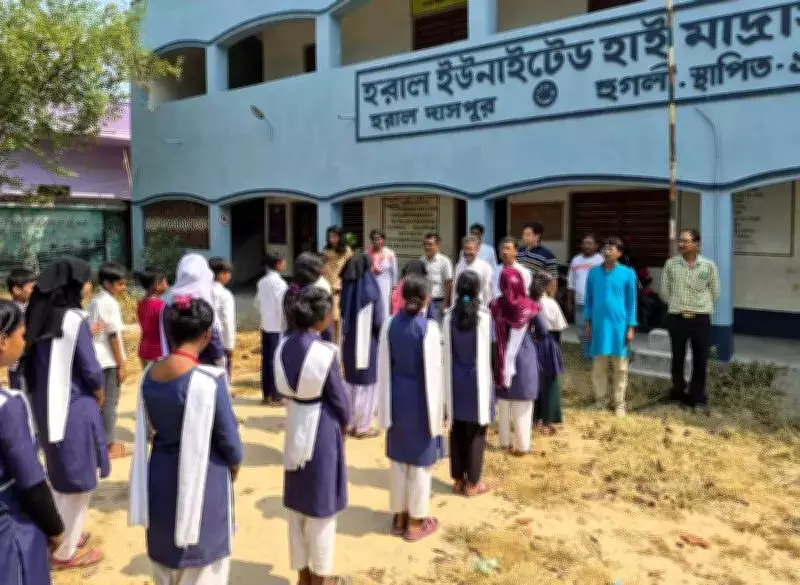
The Suvendu Adhikari-led West Bengal government has initiated a comprehensive review of all madrasas in the state. District magistrates (DMs) have been directed to submit detailed reports on these institutions in their respective districts to the state secretariat, Nabanna, by July 5.
Routine Administrative Exercise or First Step?
The West Bengal Minority Affairs and Madrasah Education Department issued a notification, describing the review as a "routine administrative exercise." However, this survey order marks the first such initiative by Bengal's first Bharatiya Janata Party (BJP) government.
In January 2002, then-Chief Minister Buddhadeb Bhattacharjee had announced a government plan to monitor, register, or close unrecognised Khariji madrasas operating along the India-Bangladesh border. However, Bhattacharjee was forced to withdraw the proposal within days following backlash from religious organisations and objections from Left Front coalition partners.

Types of Madrasas in Bengal
Officially, the Bengal government funds and regulates two types of madrasas: 614 aided and 601 unaided. Additionally, there are 14 English-medium government-aided madrasas. Around 5.5 lakh to 6 lakh students study at these recognised institutions.
However, there is another category of institutions run and maintained by individuals, communities, or private organisations, known as Maktab or Khariji madrasas. Functioning as charitable boarding schools that provide free education, food, and lodging to impoverished students, these madrasas are found across Bengal, with heavy concentrations in Murshidabad, Malda, North Dinajpur, South 24 Parganas, and Birbhum. While there is no official count for these institutions, their numbers are estimated to be well over 1,000.
Details Sought from District Magistrates
The DMs have been asked to provide relevant operational details, including the foundation date of each madrasa, its registration status with the madrasah education department, and specific registration data. The reports must also detail student enrolment figures and the strength of teaching and non-teaching staff. Additionally, DMs will have to specify whether a madrasa is residential or privately aided and outline the exact curriculum offered there. The order stated that the accumulation of this information is necessary to draft future educational plans and welfare steps for students.
Historical Context
The madrasa education system in Bengal grew and flourished after the foundation of the Calcutta Madrasah in 1780 by the British East India Company. Bengal was also the first state in India to pass the West Bengal Board of Madrasah Education Act, 1994, granting these institutions academic, administrative, and financial powers, as well as statutory status equivalent to a state education board.
In January 2002, former Chief Minister Bhattacharjee's announcement followed an armed attack outside the American Center in Kolkata. He had stated that these unmonitored institutions received funding from external sources and engaged in activities that threatened state security. The announcement produced an immediate backlash from organisations including the Jamiat Ulema-e-Hind, with the Forward Bloc, RSP, and CPI also objecting to the move.