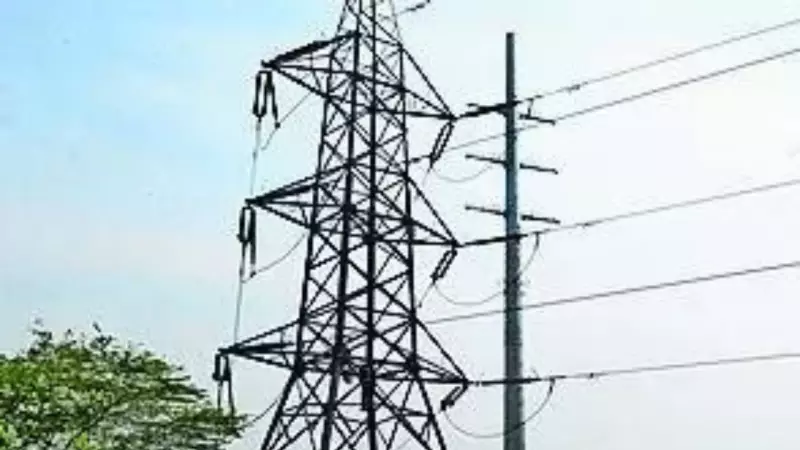
Controversial Auto-Tariff Proposal in Draft Electricity Policy Ignites Nationwide Debate
The Union Ministry of Power's recently published draft National Electricity Policy (NEP) for 2026 has ignited significant controversy across India with its proposal for automatic annual electricity tariff increases. The contentious clause, which would take effect from the financial year 2026-27, has sparked heated discussions among stakeholders, regulators, and consumer advocacy groups about the balance between financial sustainability and consumer protection.
The Automatic Tariff Mechanism Explained
Buried within Clause 2 under Section 4 on 'Financial Viability and Competitiveness' of the draft policy published on January 20, the provision states clearly: "From FY 2026-27, tariffs must be linked to a suitable index for automatic annual revision which operates if no tariff order is passed by the State Commission." This essentially means that if any State Electricity Regulatory Commission (SERC) fails to issue a new tariff order within the mandated timeframe, electricity bills would automatically increase based on an inflation-linked index.
The exact formula for these automatic increases remains undefined in the current draft, though officials suggest it would likely be tied to established economic indicators such as the Wholesale Price Index (WPI) or Consumer Price Index (CPI). The policy document invites comments and suggestions from all stakeholders within a 30-day window, making this automatic tariff clause a focal point for discussion.

Official Justification: A Necessary Financial Backstop
Government officials and regulatory sources defend the provision as an essential financial safeguard for India's struggling power distribution sector. A source from the Uttar Pradesh Electricity Regulatory Commission (UPERC) explained that the intent is to prevent utilities from experiencing severe financial distress when regulatory processes face delays.
"The idea is to allow an automatic increase for a defined period until the Commission decides," the UPERC source emphasized, adding that "it is not a blank cheque" for unlimited increases. The official further clarified that any automatic tariff hike would be subject to the utility first filing a proper petition, and if a utility fails to submit its tariff proposal on time, the automatic increases would cease entirely.
This mechanism is designed as a temporary bridge specifically for situations where the regulatory process exceeds the mandated 120-day window for tariff determination. Proponents argue that such indexation represents a practical tool for ensuring financial stability in a sector where distribution company debts have reportedly exceeded Rs 7 lakh crore nationwide.
Consumer Advocates: A Dangerous Overreach
Consumer rights organizations and advocacy groups have raised serious concerns about what they perceive as a dangerous overreach that undermines established regulatory processes. Avadhesh Kumar Verma, chairman of the Uttar Pradesh Rajya Vidyut Upbhokta Parishad and a member of the Central Electricity Regulatory Commission's advisory committee, has strongly criticized the provision.
"It strips SERCs of their core statutory duty," Verma asserted. "The revised policy proposes automatic cost recovery, without express Commission approval." He contends that the proposal is legally untenable, pointing specifically to sections 61, 62, and 86 of the Electricity Act, 2003, which vest exclusive tariff-setting authority with the regulatory commissions.
Consumer groups warn that the automatic tariff mechanism could potentially:

- Undermine established due process in tariff determination
- Weaken consumer protection mechanisms
- Lead to unchecked electricity price increases without proper scrutiny
- Reduce transparency in how electricity costs are calculated
The Broader Context and Implications
The debate over this automatic tariff provision occurs against the backdrop of India's ongoing efforts to reform its electricity sector while balancing multiple competing priorities. The draft National Electricity Policy 2026 represents the government's comprehensive vision for the power sector's development over the coming years, addressing everything from renewable energy integration to financial sustainability.
As the consultation period progresses, stakeholders from various sectors are expected to submit detailed responses to this controversial clause. The outcome of these discussions could significantly shape how electricity tariffs are determined across India for years to come, potentially setting precedents for how regulatory delays are addressed in other infrastructure sectors as well.
The tension between ensuring financial viability for power distribution companies and protecting consumer interests remains at the heart of this policy debate, with the automatic tariff proposal serving as the flashpoint for broader discussions about governance, accountability, and economic fairness in India's essential services sector.