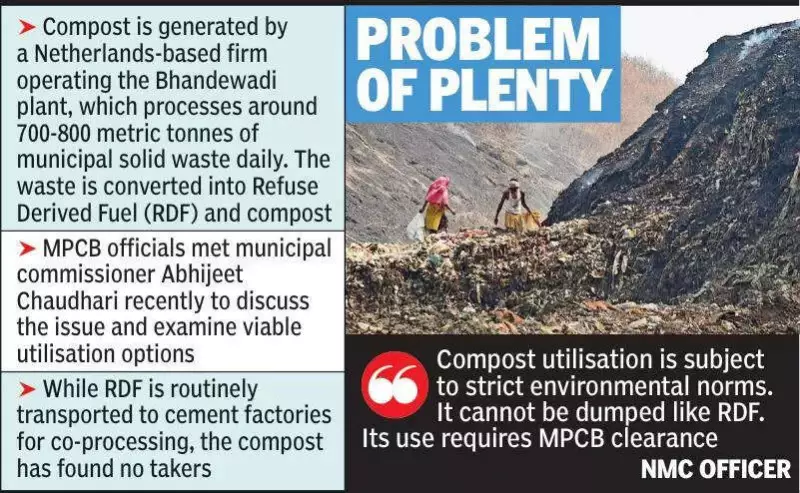
A staggering stockpile of approximately 55,000 tonnes of compost, produced from processing the city's solid waste, has become a major headache for Nagpur's civic authorities. With no buyers in sight, the material is accumulating at the Bhandewadi waste processing facility, forcing the administration to urgently explore unconventional disposal methods, including using it to fill abandoned quarries and mines.
High-Level Meeting to Address the Mounting Problem
On Friday, officials from the Maharashtra Pollution Control Board (MPCB) held a crucial meeting with Nagpur Municipal Commissioner Abhijeet Chaudhari to tackle the issue. The discussions, which also included Additional Municipal Commissioner Vasumana Pant, focused on finding viable utilisation options for the enormous compost heap. Key points on the agenda were securing necessary regulatory approvals, ensuring environmental safeguards, and addressing the shrinking operational space at the city's sole waste processing plant.
The compost is a byproduct of the daily processing of 700 to 800 metric tonnes of municipal solid waste by a Netherlands-based company operating the Bhandewadi plant. The facility converts waste into Refuse Derived Fuel (RDF) and compost. While the RDF is regularly sent to cement factories for co-processing, the compost has found no market, leading to the critical accumulation.

Quarry Reclamation: A Potential but Complex Solution
The MPCB has identified at least three potential quarry sites where the compost could be used for reclamation purposes. However, permission has been granted for only one location so far. MPCB Regional Officer Hema Deshpande explained that the board is examining a proposal to use the compost in low-lying and abandoned quarries already permitted for fly ash filling.
"One quarry at Pachgaon mine on Umred Road has been given permission for filling," Deshpande stated. "Instead of using only natural soil, a layered method employing fly ash, cured soil, and compost could be considered. However, this is still at a preliminary discussion stage."
Additional Municipal Commissioner Vasumana Pant highlighted the stark difference in the fate of the two waste products. "RDF has a clear outlet, but compost disposal remains a challenge. It is occupying valuable space at the facility," Pant told TOI.
Regulatory Hurdles and Operational Strain
Officials revealed that the Nagpur Municipal Corporation (NMC) has already recovered a penalty from the plant operator for failing to dispose of the compost, yet the core issue persists. One official emphasised the strict environmental norms governing compost use. "It cannot be dumped like RDF. Its use requires MPCB clearance," the official said.
Experts are now warning that the situation could severely strain waste processing operations at Bhandewadi if a scientifically approved disposal plan is not finalised soon. The crisis exposes a significant gap in end-use planning, despite the city having advanced waste treatment systems in place. The mounting compost pile underscores the need for a sustainable and market-linked solution for recycled products in urban waste management.