The recent Bihar election results have sparked numerous interpretations and analyses across political circles. While pro-establishment voices celebrate the outcome as validation of current leadership, opposition groups cry foul, alleging electoral manipulation. However, the truth behind Bihar's voting behavior requires deeper examination beyond surface-level political rhetoric.
The Four Bihari Icons That Explain Everything
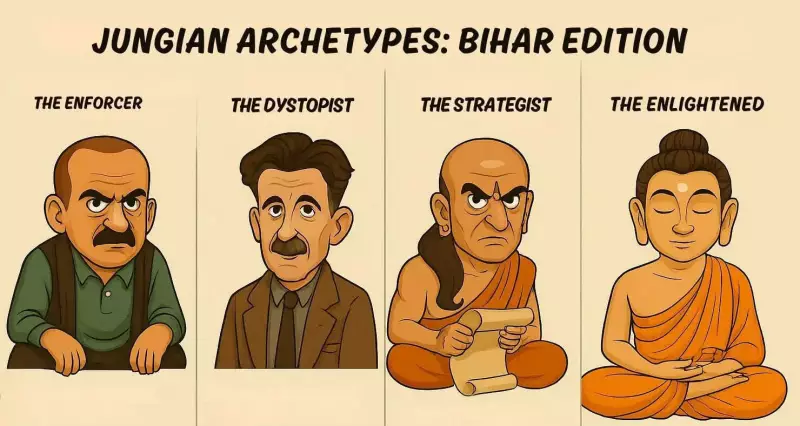
Political analysts and psephologists often oversimplify Bihar's electoral dynamics by reducing them to caste calculations. This perspective misses the complex psychological and sociological factors at play. The key to understanding the Bihar elections lies in examining four quintessential Bihari icons and their corresponding Jungian archetypes that collectively explain the voting pattern, the opposition's reaction, strategic miscalculations, and public sentiment.
Sardar Khan: The Enforcer Archetype
Represented by Manoj Bajpayee's character in Anurag Kashyap's cinematic masterpiece, Sardar Khan embodies the Enforcer archetype driven by badla or revenge. This character reflects a significant shift in voter psychology. While a decade ago voters sought badlav or change, the 2014 election marked a turning point where the electorate demonstrated satisfaction with the status quo.

In Jungian terminology, the Enforcer represents the Shadow Animus - the primal instinct for confrontation, vengeance, and settling scores. Interestingly, this archetype manifested as a desire to prevent Bihar from returning to earlier states of instability and chaos. Crucially, the female voters played a decisive role, prioritizing safety and stability over traditional tribal loyalties.
Some pre-election analyses suggested that Gen Z voters might support the Mahagathbandhan due to fading memories of the turbulent 1990s. However, as George RR Martin famously wrote, 'the North remembers' - and so does Bihar's electorate, retaining collective memory of past instability.
George Orwell: The Dystopian Perspective
The second archetype draws inspiration from Motihari-born author George Orwell, whose birthplace likely influenced his bleak depictions of fascism and authoritarianism. This perspective explains the post-result disillusionment among various groups - from disappointed political heirs to international observers and elite commentators disconnected from ground realities.
This archetype represents the classic Wounded Superego, struggling to comprehend why voters didn't embrace their preferred narrative. Supporters of this view cannot fathom that the Rand-Marx utopia promised by previous regimes failed to deliver meaningful social justice. Consequently, they attribute the election outcome to institutional collapse, compromised state machinery, and a hypnotized electorate rather than acknowledging genuine public sentiment.
Chanakya: The Strategist's Reality Check
Modeled after the ancient Magadha strategist Chanakya, this archetype represents political masterminds who learned a crucial lesson about the difference between advising from sidelines and being in the political arena. The strategist in question discovered that theoretical political wisdom doesn't always translate to practical electoral success.
In Jungian framework, this exemplifies the Inflated Ego - an outward identity carefully crafted as the master strategist or election whisperer that eventually leads to self-deception. The strategist began believing their own narrative, only to face the harsh reality of electoral mathematics and ground-level voter behavior.
Buddha: The Transcendent Voter
The final archetype, named after the enlightened prince, represents large segments of the population that have reached a state of political transcendence. These voters believe that regardless of electoral outcomes, their fundamental circumstances won't change significantly. Despite the current regime being in power for nearly two decades, Bihari workers - both white and blue collar - continue migrating to other states for employment opportunities.

This represents the Transcendent Self in Jungian terms - voters who rise above political conflict not from apathy but from clarity. They've outgrown the need to identify winners and losers, paint political saints and villains, or decode electoral mandates and narratives. Like Sisyphus from Greek mythology, they continue their daily struggles, pushing their boulders uphill, understanding that the universe will unfold as it should without their direct political intervention.
Collective Understanding of Bihar's Political Landscape
Together, these four archetypes provide a comprehensive framework for understanding Bihar's complex political ecosystem. They explain the hopeful voters expecting better tomorrows, the denial among those whose reality didn't materialize, the strategists learning hard lessons about political consulting, and the transcendent citizens who've accepted that fundamental change remains elusive.
As the author rightly questions whether this analysis exists only in his mind, he quotes Dumbledore's wisdom: 'Of course it is happening inside your head, but why on earth should that mean that it is not real?' This philosophical approach to understanding Bihar's elections moves beyond conventional political analysis to explore the deeper psychological and sociological currents shaping India's most politically complex state.