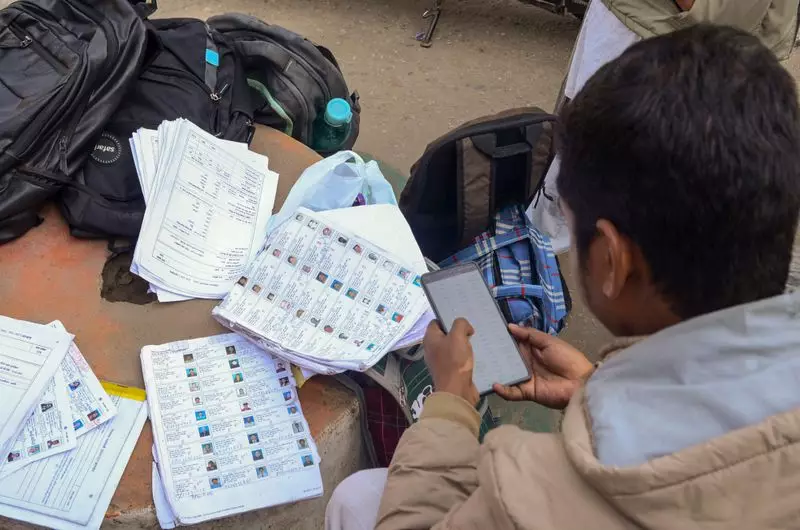
The draft electoral roll for Uttar Pradesh, published recently, has revealed a staggering revision in the state's voter database. A massive 2.89 crore (28.9 million) names have been deleted from the previous list. Concurrently, the exercise has also registered 1.41 crore (14.1 million) new voters, reflecting a significant update to the electoral landscape of India's most populous state.
Reasons Behind the Large-Scale Deletions
Navdeep Rinwa, the Chief Electoral Officer (CEO) of Uttar Pradesh, clarified that the removal of such a high number of names is part of a standard and continuous process mandated by the Election Commission of India. He attributed the deletions primarily to the demise of voters, duplicate entries, and shifts in residence. When individuals register as voters in a new constituency, their names are automatically removed from the previous location's list to prevent duplication. This systematic clean-up is essential for maintaining the accuracy and integrity of the electoral roll.
The CEO emphasized that the process is transparent and ongoing. "Names are being removed and added on a daily basis," Rinwa stated, assuring that the final list will be prepared only after considering all claims and objections from the public. The current figures represent the draft stage, and the final numbers are subject to change based on the verification process.

Current Statistics and Demographic Breakdown
As per the released draft, Uttar Pradesh now has a total of 15,32,21,956 (over 153 million) electors. A gender-wise analysis shows 8,06,99,415 male voters and 7,25,21,272 female voters. The data also accounts for 1,269 voters registered under the 'third gender' category.
The draft roll indicates a healthy addition of new, young voters. Out of the 1.41 crore new enrollments, a substantial portion belongs to the youth demographic, specifically those in the 18-19 years age group. This inclusion is a positive sign for democratic participation. Furthermore, the electoral gender ratio has seen a slight improvement, moving from 904 women per 1000 men to 905 women per 1000 men.
Next Steps and Public Participation
The publication of the draft roll kicks off a crucial period for public scrutiny. Citizens have a designated window to verify their details and raise concerns. They can file claims for additions, objections to incorrect entries, and requests for corrections in the information. This participatory phase is vital for ensuring that no legitimate voter is left out and that ineligible entries are weeded out before the final list is frozen for the next election.
Electoral officials across Uttar Pradesh's districts are tasked with facilitating this process, making forms available, and addressing queries from the public. The final electoral roll, which will be the basis for future elections in the state, will be published only after the completion of this comprehensive verification and correction drive.
This large-scale revision in Uttar Pradesh, a key political bellwether, underscores the Election Commission's ongoing efforts to create a clean, accurate, and updated voter list, which is the cornerstone of a free and fair electoral process.