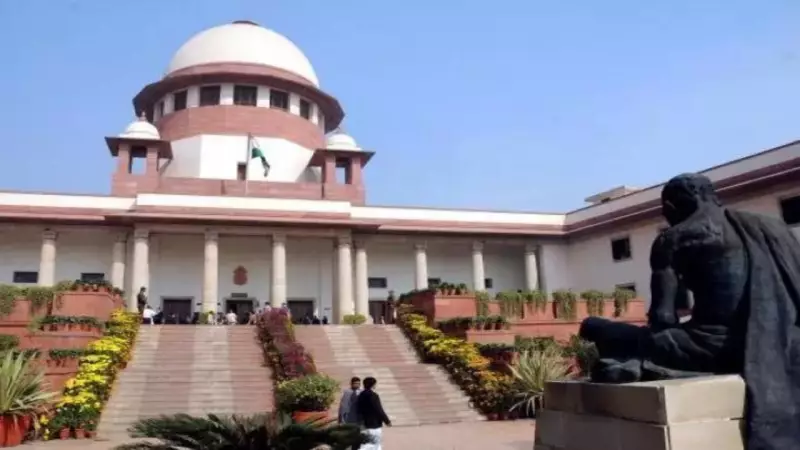
The Supreme Court of India delivered a crucial verdict on Tuesday regarding the upcoming municipal elections in Maharashtra, allowing polling to proceed while issuing a stern warning about constitutional violations.
Election Process to Continue with Conditions
The bench led by Chief Justice Surya Kant and Justice Joymalya Bagchi declared that it would not interfere with the December 2 polling schedule for 246 municipal councils and 42 nagar panchayats across Maharashtra. However, the court made it clear that it would not hesitate to set aside election results in constituencies where reservation limits exceed the constitutional 50% ceiling.
This development came during hearings where petitioners, represented by senior advocates Vikas Singh and Narender Hooda, alleged that the 50% reservation limit had been breached in 57 civic bodies. The court has directed the State Election Commission (SEC) to furnish detailed information about these alleged violations by Friday.

Constitutional Imperatives and Tribal Representation
The Supreme Court bench emphasized that "completion of the election process will not impede SC from striking down the elections" if constitutional norms are violated. CJI Kant explicitly stated that any reservation found exceeding 50% would be set aside as "constitutionally impermissible."
Meanwhile, arguments from Solicitor General Tushar Mehta and senior advocates Indira Jaising and Shekhar Naphade highlighted the complex reality in five districts with overwhelming tribal populations. They questioned whether representation should be limited strictly by the 50% ceiling in areas where tribal communities constitute the majority.
Broader Implications and Future Proceedings
The court acknowledged the need to balance reservations while ensuring "respectable representation to all communities." The bench has sought comprehensive data about OBC, tribal, and SC population percentages in the civic bodies scheduled for December 2 elections.
Significantly, the SEC revealed that the poll schedule for 32 zila parishads and 20 municipal corporations remains unfinalized. The commission also noted that implementing the Banthia commission recommendations would require fresh delimitation and reservation calculations for each civic body, a process that would consume considerable time.
The Supreme Court has scheduled the main hearing on reservation issues for February 2024, leaving open the possibility of referring the matter to a larger bench if grey areas persist in the complex issue of civic body reservations.