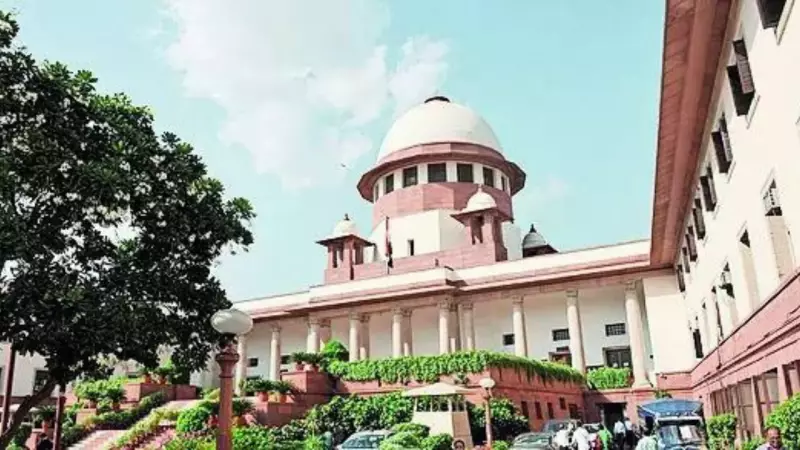
The Supreme Court has given the green light for the Maharashtra State Election Commission to proceed with local body elections across the state, while strictly enforcing the 50% reservation ceiling that has been a point of legal contention.
Court Directs Election Process for Most Local Bodies
The Supreme Court bench comprising Chief Justice Surya Kant and Justice Joymalya Bagchi directed the State Election Commission to initiate the election process for all municipal corporations, zila panchayats, and panchayat samitis in Maharashtra. However, this clearance comes with an important exception - the process cannot proceed where total reservation exceeds the constitutional 50% limit.
The SEC informed the court that among the 29 municipal corporations, only two have exceeded the 50% reservation ceiling. The commission, represented by senior advocate Balbir Singh, assured the bench that similar calculations for 32 zila panchayats and 336 panchayat samitis would be completed shortly.

December Polls to Proceed With Results Conditionally
In a significant development, the court has allowed the December 2 elections for 246 municipal councils and 42 nagar panchayats to proceed as scheduled. However, the SEC revealed that 57 of these local bodies - comprising 40 municipal councils and 17 nagar panchayats - have crossed the 50% reservation threshold.
The bench made it clear that results for these 57 local bodies would be subject to the outcome of pending petitions challenging the reservation pattern. The court has scheduled the final hearing on these petitions for January 21, 2024.
Legal Battle Over OBC Reservation
The election process for Maharashtra's local bodies had been stalled since August 2022 when the Supreme Court imposed a status quo order. This order came in response to petitions challenging the state government's ordinance that provided 27% OBC reservation in local bodies based on the Banthia Commission recommendations.
Senior advocate Vikas Singh, representing the petitioners, strongly argued that the total reservation including OBC quota cannot exceed the 50% ceiling established by constitution benches of the Supreme Court. He clarified that in areas where SC and ST population exceeds 50%, proportionate quota for these communities could cross the 50% mark, but this would mean no reservation for OBCs in such areas.
This position was contested by senior advocate Indira Jaising, who argued that such an approach would deprive backward classes of quota benefits and result in their underrepresentation in civic bodies.
The Supreme Court had initially asked the SEC to complete local body elections by September 30, following OBC reservation criteria that existed before the Banthia Commission's report in July 2022. However, the deadline was extended to January 31 after the court criticized the commission for its slow progress in completing the necessary exercises.
The Brihanmumbai Municipal Corporation, among other significant local bodies, is now set to see its election process move forward after prolonged legal delays, marking a crucial step toward democratic representation in Maharashtra's urban and rural local governance.