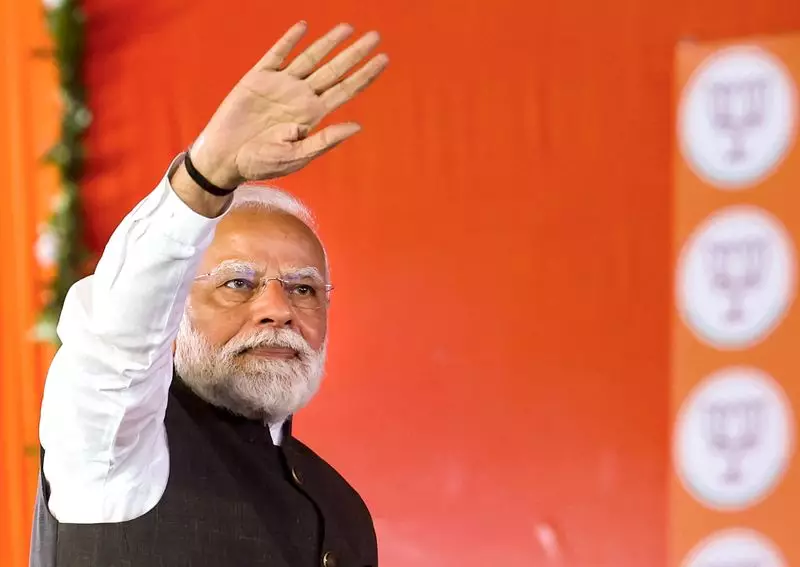
Prime Minister Narendra Modi has declared the impressive 65 percent voter turnout in Bihar as a significant setback for the opposition INDIA alliance, suggesting that the high participation rate reflects widespread public disapproval of their policies and approach.
Political Earthquake in Bihar
During his recent address, the Prime Minister emphasized that the substantial voter engagement in Bihar sends a clear message to political opponents. The 65 percent turnout figure has been interpreted by the ruling party as evidence of growing public support for their governance model and development agenda.
"The massive participation of voters in Bihar has delivered a 65-volt shock to the opposition INDIA bloc," PM Modi stated, using the electrical metaphor to underscore the intensity of what he perceives as public sentiment against the opposition coalition.

Strategic Implications for Assembly Elections
Political analysts are closely monitoring these developments as Bihar prepares for crucial assembly polls. The high voter engagement is being viewed as a potential indicator of shifting political allegiances in the strategically important state.
The INDIA alliance, which comprises several opposition parties, had been hoping to make significant gains in Bihar. However, the substantial voter turnout has created uncertainty about their prospects, with the ruling party claiming it demonstrates waning support for the opposition coalition.
PM Modi's characterization of the turnout as an "electric shock" to opponents highlights the government's confidence in their electoral position. The statement comes at a critical juncture in Bihar's political calendar, with all major parties fine-tuning their campaign strategies.
Broader Political Context
The Prime Minister's remarks reflect the ongoing political realignment in Bihar, where voter behavior often signals broader national trends. The emphasis on the 65 percent figure suggests the ruling party sees this as a validating metric for their policies and leadership.
Opposition parties, meanwhile, are analyzing the turnout data to understand voter sentiment and recalibrate their approach. The INDIA bloc faces the challenge of countering the government's narrative while presenting a compelling alternative to voters.
As political temperatures rise in the lead-up to assembly elections, the voter turnout statistics have become a central point of contention between competing political formations. Both sides are interpreting the numbers to support their respective narratives about public support and political momentum.
The coming weeks will reveal whether the high voter engagement indeed translates into electoral gains for the ruling party or whether the opposition can successfully challenge this interpretation of voter sentiment.