Electoral Roll Update Hits Major Roadblock
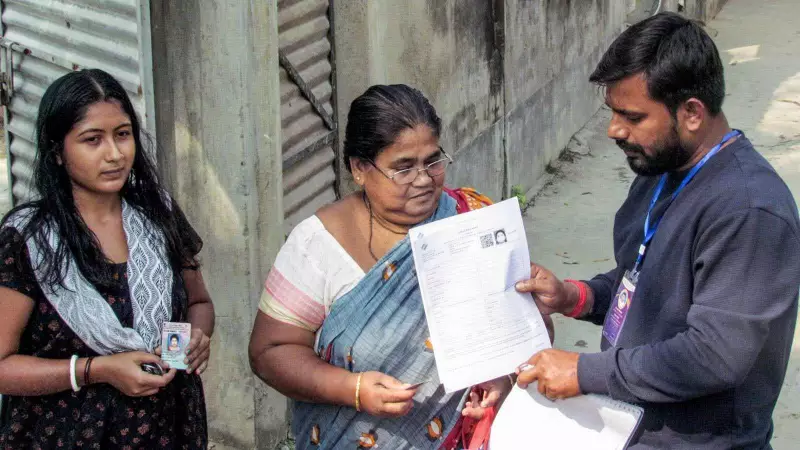
The Election Commission's ambitious Special Intensive Revision (SIR) of electoral rolls has encountered significant challenges at the halfway mark, with only 16% of completed forms digitized despite 99% distribution achievement. The process, ongoing in nine states and three Union Territories, has put tremendous pressure on Booth Level Officers (BLOs), leading to concerning consequences including three reported suicides.
Deadline Pressure and Tragic Consequences
As the December 4 submission deadline approaches, BLOs across multiple states are struggling with the massive task of collecting, verifying, and digitizing forms for approximately 51 crore registered electors. The pressure has turned fatal in three cases, with the latest suicide reported from West Bengal where 48-year-old BLO Shantimoni Ekka took her own life. Her husband revealed she had been juggling duties as both a BLO and anganwadi worker while facing language barriers in the Hindi-speaking area.
West Bengal Chief Minister Mamata Banerjee strongly criticized the process, stating that "a process that earlier took 3 years is now being forced into 2 months" and blaming the EC for "unplanned, relentless workload." The state has recorded 18.43% digitization rate so far.

State-wise Performance and Challenges
The digitization progress varies dramatically across states, highlighting the uneven implementation of the SIR process. Uttar Pradesh, with its massive population, has managed only 3.77% digitization, while Madhya Pradesh shows better performance at over 22%. Kerala, which has moved the Supreme Court seeking postponement, records a mere 1.89% completion.
In several states, administrative actions against BLOs have compounded the problems. Bulandshahr district in UP saw FIRs filed against six BLOs for negligence and failure to report duty. Similar actions were taken in Madhya Pradesh districts including Raisen, Khandwa, and Khargone, where BLOs faced suspensions, penalties, and even salary deductions.
Technical and Logistical Hurdles
The current SIR process requires BLOs to physically match new forms with old electoral rolls from before 2005, creating what officials describe as a "monumental task." Unlike the Bihar revision where documents were required, this phase relies solely on form matching, increasing the verification burden.
In Tamil Nadu, where digitization stands at 17.37%, help desks face consistent problems with electors struggling to provide voter ID numbers and polling booth details of themselves or relatives from before 2005. The issue is particularly acute in low-income areas, where an estimated 40% of voters fail matching with the 2005 rolls.
Adding to West Bengal's challenges, UIDAI authorities have identified approximately 34 lakh Aadhaar card holders who may be deceased, requiring BLOs to ensure these names don't appear in the final rolls.
Extended Timeline and Future Steps
Election Commission sources have indicated some flexibility, noting that digitized forms can technically be uploaded until December 9 when the draft electoral rolls are published. This provides BLOs with a few extra days beyond the December 4 submission deadline for electors.
The states and UTs undergoing SIR include Chhattisgarh, Goa, Gujarat, Kerala, Madhya Pradesh, Rajasthan, Tamil Nadu, Uttar Pradesh, West Bengal, Puducherry, Andaman and Nicobar Islands, and Lakshadweep. The EC has simultaneously ordered a separate 'Special Revision' in Assam, which faces elections within months.
As the deadline looms, states are implementing various measures to accelerate the process. Kerala has established BLO hubs for collective digitization efforts, while Chennai Corporation has set up help desks. However, with current progress rates and the sheer scale of the task, the successful completion of the Special Intensive Revision remains uncertain.