As Mumbai prepares to cast its vote in the long-awaited Brihanmumbai Municipal Corporation (BMC) elections on January 15, a singular, pressing concern has cut across political divides: the city's toxic air. For the first time, every major political alliance contesting the civic polls has placed air pollution redressal and sustainability at the heart of their manifestos, marking a significant shift in Mumbai's political discourse.
Political Promises: A Green Consensus Emerges
The campaign trail reveals a rare unanimity on an environmental crisis. The BJP-led Mahayuti alliance has unveiled a comprehensive environmental plan, promising an allocation of Rs 17,000 crore towards sustainability. Key pledges include doubling the number of air quality monitoring stations from the current 28 and installing real-time AQI display boards at major traffic junctions.
Similarly, the joint front of the Maharashtra Navnirman Sena (MNS), Shiv Sena (UBT), and the Nationalist Congress Party (SP) has vowed to urgently reduce emission levels, strictly implement an environmental action plan, and protect green lungs like the Aarey forest, Sanjay Gandhi National Park, and the city's mangroves.

Not to be left behind, the Congress and Samajwadi Party-led Maha Vikas Aghadi (MVA) has promised a 'Green Mumbai 2030' plan. This initiative focuses on real-time AQI monitoring and imposing stricter controls on rampant construction activities across the metropolis.
Ground Reality: Candidates Echo the Green Cry
The focus on clean air is not limited to party manifestos; it has percolated down to individual campaigns. BJP's Harshita Narwekar, contesting from Ward 227 in Cuffe Parade, stated her priority is to amplify the green cover in her area, ensuring development aligns with climate resilience.
In Malad's Ward 34, an area consistently recording poor air quality, Congress candidate Haider Ali Shaikh said his primary focus would be to maintain AQI within safe limits. "My key objective is to ensure all construction sites in my area adhere to norms and don't contribute to local pollution. I will also work to stop activities like garbage burning," Shaikh told The Indian Express.
Expert Scrutiny: Lofty Promises, Missing Details
Despite the political consensus, environmental experts have raised red flags, criticising the promises as broad commitments lacking concrete timelines and actionable measures. Bhagwan Kesbhat, founder of NGO Waatavaran, pointed out a critical omission: strengthening public transport.
"Vehicular emission is a key factor behind Mumbai's pollution. Yet, nobody is talking about augmenting the fleet of BEST buses. The fleet size is shrinking. Unless bus numbers increase, people will depend on private vehicles, increasing emissions," Kesbhat argued.
He also highlighted the absence of commitments to make Mumbai landfill-free. "The untreated legacy waste at sites like Deonar generates methane, contributing to air pollution. Yet, no one is talking about challenging this issue," he added.
The Deepening Crisis: Mumbai's Air Quality Decline
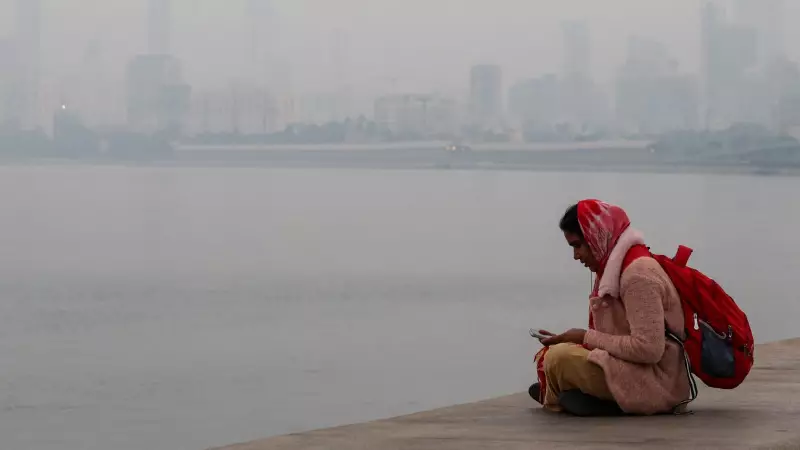
The political focus comes against a grim backdrop. Since 2022, Mumbai has experienced worsening air quality, particularly between October and mid-February—a trend once considered rare for a coastal city. Despite its geographical advantage, the city has recorded a steady rise in poor AQI days over the past four years.
Between November 2022 and January 2023, Mumbai recorded poor or very poor AQI on 66 out of 92 days. Similar trends continued in subsequent years, with only marginal improvement during unseasonal rainfall.
Atmospheric scientist Dr. Gufran Beig explained that climate change has slowed air reversal processes. Mumbai's proximity to the coast also makes it vulnerable to particles from the Thar desert and humid air from the Middle East, exacerbating post-monsoon pollution annually.
Data reveals vulnerable pockets like Mazgaon, Deonar, and Malad consistently record poor to very poor AQI. Officials attribute this to localised factors: emissions from refineries and thermal stations in Deonar, and construction dust and vehicular mobilisation in Malad and Kandivali.

The Accountability Gap and a Glimmer of Hope
Residents believe the absence of elected corporators in recent years weakened accountability. "Infrastructure projects got priority over environmental issues because elected representatives were not in place. We had no one to complain to directly," said Shakti Tripathi, a Mulund resident.
However, Dr. Beig finds encouragement in the political acknowledgment of the crisis. "Mumbai is still in a much better state. Now that political dispensation has taken note, if they seriously act, things can get really better," he stated.
A senior state government official noted that political focus could unlock greater resource allocation. "Everything comes down to the budget. Now that parties are talking about mitigation, they must invest in infrastructure like sprinkling vehicles, strengthening the AQI network, and scaling up waste management," the official said.
As Mumbai heads to the polls after a nine-year gap, the question remains whether these shared green promises will translate into breathable air or remain mere words on campaign leaflets. The implementation challenge is as vast as the smog that now regularly blankets the city's skyline.