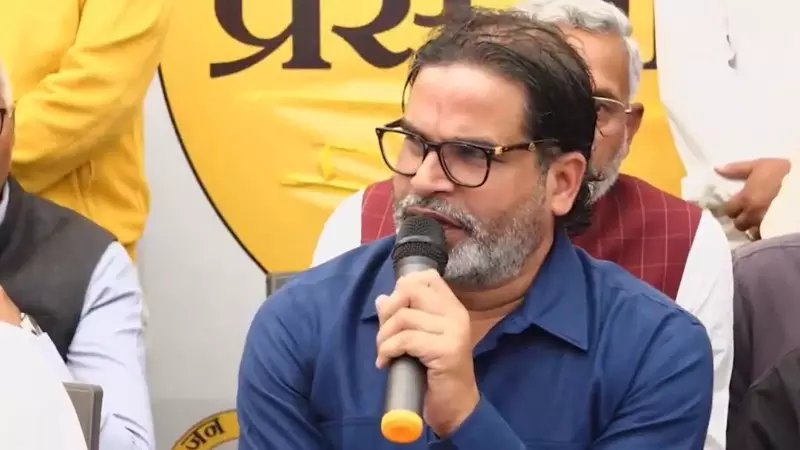
In a significant post-election analysis, political strategist Prashant Kishor has strongly refuted allegations that Bihar voters sold their ballots for Rs 10,000 during the recent state assembly elections. Speaking at his first press conference after the poll results, Kishor provided a nuanced perspective on what truly influenced the electoral outcome.
The Rs 10,000 Controversy Explained
The controversy stems from the Mukhyamantri Mahila Rojgar Yojana announced by the Nitish Kumar government ahead of the 2025 Bihar Assembly elections. Under this scheme, approximately 1.25 crore women voters received financial assistance of Rs 10,000 to promote self-employment opportunities.
The Congress party had alleged that these cash transfers were strategically timed, with many transactions occurring just hours before the Model Code of Conduct came into effect. Senior Congress leader Ashok Gehlot went further, accusing the Election Commission of India of colluding with the BJP and JD(U).

Kishor's Mathematical Rebuttal
Prashant Kishor dismantled the vote-buying narrative with a simple mathematical calculation. "People are saying voters sold their votes for Rs 10,000. That is not true; people here will not sell their future or their children's future," he asserted.
"If you calculate, Rs 10,000 comes down to Rs 5.5 per day. Who will sell their vote for this amount?" Kishor questioned, emphasizing that reducing the debate to mere cash transactions insulted the intelligence of Bihar's electorate.
Government Machinery and Welfare Promises
While dismissing direct vote-buying claims, Kishor revealed how government machinery was effectively mobilized to influence voter sentiment. He detailed that in every assembly constituency, 60,000-62,000 people received the Rs 10,000 benefit along with promises of Rs 2 lakh loans if the NDA returned to power.
Government officials and Jeevika didis were actively involved in communicating these welfare promises to beneficiaries during the election period. Kishor highlighted the unprecedented scale of the government's commitment, noting that "for the first time in independent India – especially in Bihar – a government promised to spend Rs 40,000 crore for people."
The political analyst suggested that this massive financial commitment, rather than isolated cash transfers, created a powerful narrative that resonated with voters across the state.
Election Outcome and Future Implications
The NDA's decisive victory with 202 seats in the 2025 Bihar Assembly elections demonstrates the effectiveness of welfare politics combined with strategic implementation. Kishor's analysis provides crucial insights into how development promises, when communicated effectively through government channels, can shape electoral outcomes without resorting to crude vote-buying tactics.
His comments come amid Jan Suraaj's disappointing electoral performance, with Kishor acknowledging that while they "came to change the system," they couldn't even change the government. The press conference, held on November 18, 2025, marks an important moment in understanding the evolving dynamics of Indian electoral politics, particularly in states like Bihar where welfare schemes and direct benefit transfers are becoming increasingly significant in political discourse.