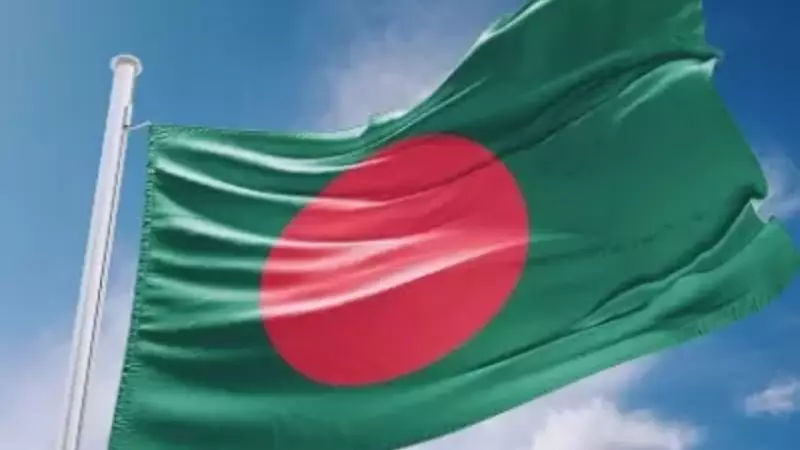
The European Union's Election Observation Mission (EU-EOM) has announced it will pay heightened attention to the safety and participation of minority communities during the upcoming national elections in Bangladesh. This decision follows a series of violent incidents targeting minorities, particularly Hindus, raising serious concerns about their security and electoral inclusion.
Escalating Violence Prompts International Scrutiny
The EU-EOM's declaration comes against a grim backdrop of ongoing attacks. The mission's chief observer, Ivars Ijabs, a member of the European Parliament from Latvia, confirmed the move on Sunday. This follows the tragic suicide of Joy Mohapatra, a Hindu man who consumed poison on Friday after reportedly being humiliated and assaulted over a debt of 500 taka (approximately Rs 370).
Mohapatra's death marks a disturbing pattern, as he is the eighth Hindu man to die since the lynching of Dipu Chandra Das in Mymensingh on December 18. Among the victims was also a journalist. The persistent violence has drawn sharp criticism from neighboring India, which has slammed the interim government led by Muhammad Yunus for downplaying the incidents and failing to prevent relentless attacks on minorities and their properties.

EU's Plan for Comprehensive Observation
Addressing reporters on the issue of intimidation faced by minority groups, Chief Observer Ivars Ijabs emphasized the gravity of the situation. "This is, of course, an important issue," he stated. To address it, the mission plans a widespread monitoring effort. "We are going to send our observers to all 64 districts of the country and they will be asked to pay special attention to such a possibility (intimidation)," Ijabs explained.
When questioned about pre- or post-poll violence, he acknowledged it as a multifaceted problem but expressed hope. "I still hope and I still expect the Bangladeshis (will address this)... elections are understanding the seriousness of this issue, because, as it was said, one life lost is one too many," he remarked. Ijabs also called for the polls to be "inclusive and participatory" for all societal groups.
Shifting Definitions and Political Context
The EU mission's focus on "all groups in society" represents a subtle shift from its earlier emphasis on the "participation of all political parties." This change occurs in the context of the political ban on the Bangladesh Nationalist Party (BNP) and the absence of its leader, Khaleda Zia, with the Awami League under Sheikh Hasina seeking a return to power.
When asked about this change in terminology, Ijabs declined to comment directly on domestic political issues. "We all know that the party registration is an issue and we know that this has been also historically complicated issue here regarding national reconciliation and transitional justice. We are not going to comment on these issues," he stated, indicating the mission's intent to focus on broader electoral integrity and citizen participation rather than specific party politics.
The international community's watchful eye, particularly from the EU and India, now adds significant pressure on Bangladeshi authorities to ensure a peaceful and fair electoral process where minority communities can participate without fear.