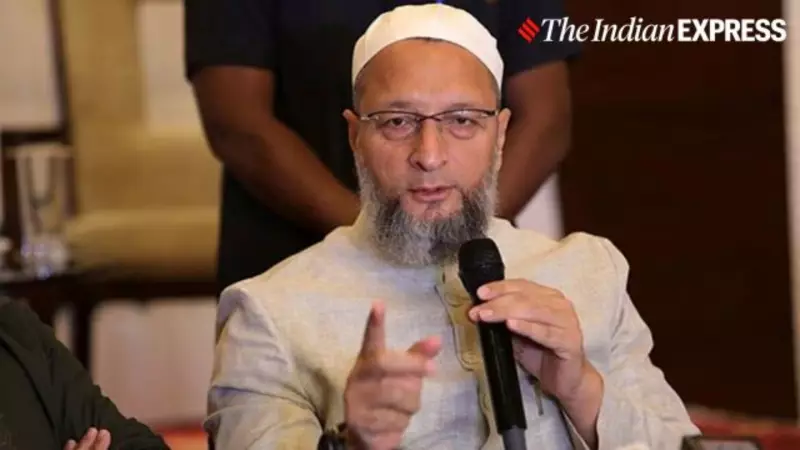
In a candid post-election analysis, senior Bihar Congress leader Shakeel Ahmad Khan has pointed to multiple factors that led to the Mahagathbandhan's disappointing performance in the recent state assembly polls. The Congress Legislature Party leader in the outgoing Bihar Assembly, who lost from Kadwa constituency, highlighted the role of AIMIM chief Asaduddin Owaisi's communal rhetoric and the influence of Jeevika workers during polling as key reasons for the Opposition's defeat.
The Jeevika Didi Factor: Direct Voter Influence
Khan provided detailed accounts of what he witnessed during the voting process in his constituency. Jeevika workers, commonly known as 'didis,' were present in and around polling booths, showing voters messages about Rs 10,000 being credited to their accounts as part of Nitish Kumar's 'dashazari' scheme. This direct influence occurred while voters stood in queues waiting to cast their ballots.
The Congress leader emphasized that this activity violated election rules prohibiting campaigning near polling stations. Despite his complaints to the Election Commission, the practice continued in several areas. Khan believes this intervention significantly boosted NDA's performance in booths where they traditionally had little support.

Owaisi's Communal Rhetoric and Its Impact
In a significant observation, Khan blamed AIMIM chief Asaduddin Owaisi for employing divisive tactics that ultimately harmed the Opposition alliance. Owaisi spoke like a communalist, according to the Congress leader, whose rhetoric to fuel Muslim communalism provided Hindu communalists with ammunition to polarize voters along religious lines.
Khan stressed that the fight must be equally vigorous against both Hindutva politics and AIMIM's brand of Muslim communalism. He noted that AIMIM's approach of invoking Muslim community sentiments often came across as taunting the Hindu community, creating further polarization.
Structural Challenges and Election Management
Beyond immediate factors, Khan pointed to broader structural issues that worked against the Mahagathbandhan. The NDA's superior election management, combined with what he perceived as partial treatment from the Election Commission, created an uneven playing field. The Rs 10,000 financial assistance to women beneficiaries arrived during the Chhath festival, timing that Khan believes significantly influenced voter behavior.
When questioned about whether the Opposition failed to address larger issues like governance problems, migration, and law and order concerns, Khan acknowledged these were discussed extensively during campaigns. He expressed puzzlement about why the massive crowds at Mahagathbandhan rallies didn't translate into electoral success.
Alliance Coordination and Seat-Sharing Issues
The Congress leader admitted that seat-sharing problems emerged during the later stages of election preparation between the RJD and Congress. While most issues were resolved, friendly fights in some constituencies damaged the alliance's prospects in those specific seats. However, Khan maintained that these localized problems didn't significantly impact the overall election outcome.
Khan dismissed suggestions that the RJD's 'jungle raj' baggage or credibility issues affected the alliance's performance, calling these 20-year-old allegations that shouldn't continue influencing contemporary elections. He also stood by the Congress's 'vote chori' allegations, claiming he encountered numerous instances where voters with valid identity cards found their names missing from voter lists.
Ultimately, Khan identified three primary factors behind NDA's success: efficient election management, perceived EC support, and the financial influence of the Rs 10,000 scheme. The comprehensive analysis of why the Opposition's campaign energy didn't convert into votes remains an urgent task for the Mahagathbandhan partners.