The Congress party is conducting a thorough internal assessment following its disastrous performance in the Bihar Assembly elections, with party leaders and losing candidates identifying multiple critical failures that led to winning just six out of 61 contested seats.
Key Reasons Behind Congress's Electoral Debacle
According to discussions with ten losing Congress candidates, the party's poor showing stems from several interconnected factors. The incumbent NDA swept the elections, securing 202 seats out of 243, while the Mahagathbandhan alliance managed only 35 seats, with Congress as a key constituent performing particularly poorly.
Leadership and Organizational Failures
Multiple candidates pointed fingers at AICC's Bihar in-charge Krishna Allavaru, describing his working style as "corporate" and "non-political" which allegedly demoralized the party cadre. "Allavaru did not travel across the state and remained restricted to Patna," one candidate revealed, adding that his appointment just eight months before polls left insufficient time to understand Bihar's complex political dynamics.

The party's weak organizational structure also came under sharp criticism. Despite Rahul Gandhi's push for strengthening district committees, several candidates noted that district committees were not properly constituted and there was no physical verification of booth committees. "Everything remained on paper," a candidate lamented.
Failed Campaign Strategies
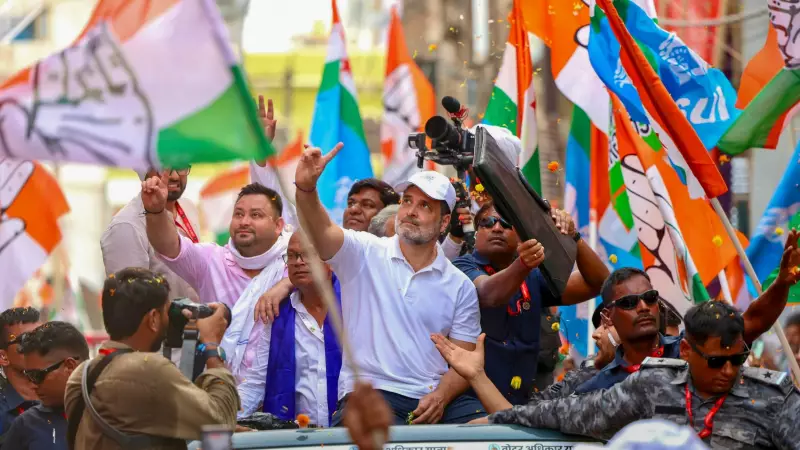
Congress leaders expressed disappointment with two major yatras conducted in the state. Rahul Gandhi's Voter Adhikar Yatra and Kanhaiya Kumar's "Palayan roko, rozgaar do" Yatra both failed to consolidate voters in the party's favor. Candidates questioned the timing and issues raised, suggesting Gandhi should have focused on basic issues like unemployment rather than "vote chori" which found little resonance with voters.
The election war rooms operated by AICC also faced criticism for running the show while excluding state leadership from key decisions regarding campaign issues and press briefings.
Internal Sabotage and Alliance Issues
Several candidates reported "internal sabotage" by disgruntled leaders who were overlooked during ticket distribution. The party faced allegations of favoritism, with at least ten turncoats receiving tickets, of which only two managed to win their seats.
The Mahagathbandhan's failure to formally announce seat-sharing and initial hesitation over declaring a chief ministerial face sent a message of disunity, according to party insiders. "Friendly fights confused party workers," one candidate noted, highlighting the coalition's disjointed campaign approach.
Strategic Miscalculations
Congress candidates identified what they called an "overvaluation" of VIP chief Mukesh Sahani's influence. The party declared him as deputy chief ministerial face expecting to gain EBC (Extremely Backward Classes) votes, but these votes largely shifted to the NDA instead.
In the Seemanchal region, which has 24 seats, Muslim votes split between Congress and AIMIM, benefiting the NDA. Some leaders blamed AICC minority department chairman Imran Pratapgarhi's attacks on Owaisi for causing counter-polarization.
The party high command has tasked several senior leaders and observers with submitting detailed reports on the poll debacle, hoping to learn from these multiple failures before future elections.