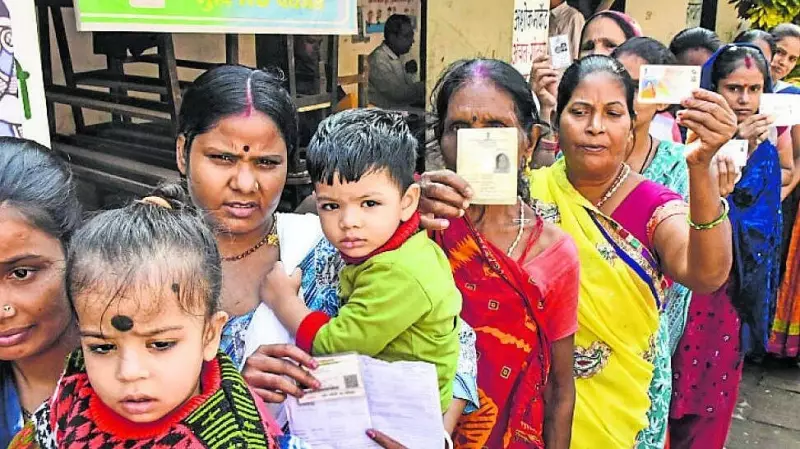
As Bihar heads into another election cycle, political parties are competing with increasingly generous welfare manifestos, creating what experts call an "illusion of welfare" that masks a troubling fiscal reality. The state is grappling with a massive debt burden exceeding ₹3.5 lakh crore, raising serious questions about the sustainability of these populist promises.
The Debt Trap Behind Welfare Promises
According to the Comptroller and Auditor General (CAG) of India, Bihar's outstanding debt reached a staggering ₹3,51,539 crore by the end of March 2023. This represents a dramatic increase from the ₹2,81,916 crore recorded in March 2022, indicating an accelerating debt accumulation that threatens the state's financial stability.
The CAG report reveals an even more concerning trend: Bihar's fiscal deficit surged to ₹37,310 crore in the 2022-23 financial year, significantly higher than the ₹28,256 crore recorded in the previous year. This growing deficit occurs despite the state receiving substantial financial support from the central government through various schemes and allocations.

Former Deputy Chief Minister Sushil Kumar Modi has been vocal about this issue, stating that Bihar's debt burden has increased by 400% since the Grand Alliance government took power. He emphasizes that this unsustainable financial situation directly results from populist schemes that prioritize short-term electoral gains over long-term fiscal health.
Election Manifestos: Promises Versus Reality
Political parties in Bihar have made welfare promises a central component of their election strategies. The ruling Mahagathbandhan (Grand Alliance) has particularly focused on social welfare programs, including:
- Financial assistance for women and students
- Employment guarantee schemes
- Subsidized food and utility programs
- Educational support initiatives
While these schemes have provided immediate relief to certain sections of society, economists question their long-term viability given the state's precarious financial position. The opposition Bharatiya Janata Party (BJP) has criticized what they describe as "financial mismanagement" and "fiscal irresponsibility" by the state government.
Political analyst DM Diwakar explains that welfare schemes have become essential tools for political parties seeking to secure votes from specific demographic groups. However, he warns that without corresponding economic growth and revenue generation, these programs become unsustainable burdens on the state exchequer.
The Path Forward: Balancing Welfare and Fiscal Responsibility
The fundamental challenge facing Bihar is how to reconcile necessary welfare measures with fiscal discipline. Experts suggest several approaches that could help address this dilemma:
First, the state needs to focus on boosting economic growth and expanding its tax base. Currently, Bihar remains heavily dependent on central government transfers, with limited internal revenue generation capacity. Developing industries, improving agricultural productivity, and creating employment opportunities could provide more sustainable funding for social programs.
Second, there's a need for better targeting of welfare schemes to ensure resources reach the most vulnerable populations efficiently. Universal benefits, while politically popular, often divert resources from those who need them most to those who don't require government assistance.
Third, improving implementation efficiency could reduce wastage and ensure that every rupee spent delivers maximum impact. Technology-driven solutions and better governance mechanisms could help achieve this goal.
As Bihar continues its development journey, the state must find a balance between immediate social needs and long-term financial sustainability. The current approach of financing welfare through accumulating debt creates intergenerational obligations that may compromise future development prospects.

The upcoming elections will be a crucial test of whether voters prioritize immediate benefits or consider the long-term economic consequences of populist manifestos. With the state's financial health at stake, the choices made in polling booths could determine Bihar's economic trajectory for decades to come.