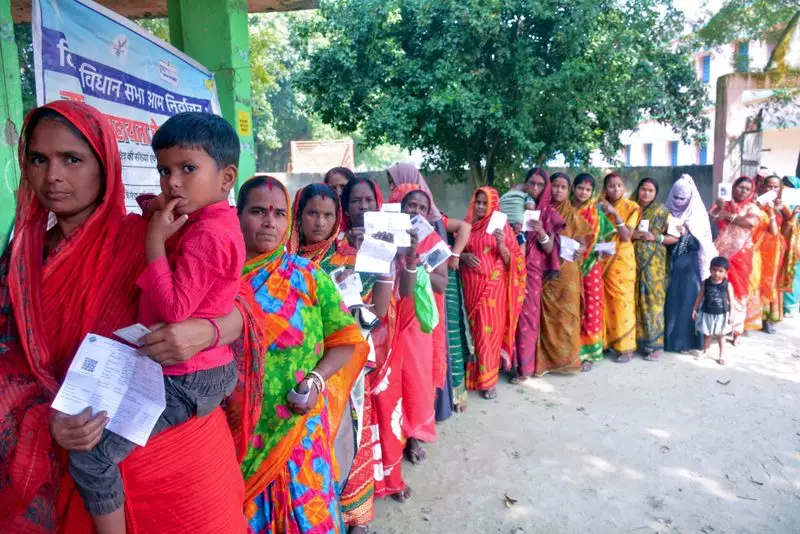
Bihar has scripted a remarkable chapter in India's democratic history by recording its highest voter turnout since the first general elections in 1951. The recently concluded Lok Sabha elections witnessed an unprecedented 59.19% participation across the state's 40 parliamentary constituencies, signaling a significant surge in electoral engagement.
Historic Numbers Break Previous Records
The Election Commission of India's comprehensive data reveals that this year's turnout of 59.19% has comfortably surpassed all previous records in Bihar's electoral history. The previous highest was recorded in 2019 at 57.33%, making this year's achievement particularly noteworthy. When compared to the inaugural general elections of 1951, which saw only 44.68% voter participation, the progress becomes even more striking.
Chief Electoral Officer H. R. Srinivasa confirmed these groundbreaking figures, emphasizing that the 2024 Lok Sabha elections have set a new benchmark for democratic participation in Bihar. The elections were conducted across all seven phases, with counting scheduled for June 4th.

Women Voters Lead the Democratic Charge
In what emerges as the most significant trend, women voters have outperformed their male counterparts by a substantial margin. The data shows that women's voter turnout reached an impressive 59.79%, while male participation stood at 58.69%. This 1.10 percentage point difference underscores the growing political awareness and participation among women in Bihar.
The gender-wise breakdown reveals a powerful narrative of women's increasing role in shaping Bihar's political landscape. This trend aligns with the broader national pattern where women voters are becoming more active participants in the democratic process.
District-Wise Performance and Urban-Rural Dynamics
Among Bihar's 38 districts, Sheohar emerged as the frontrunner with an exceptional 67.19% voter turnout. Other districts that demonstrated strong participation included Sitamarhi (64.79%), Gopalganj (64.35%), and East Champaran (63.97%).
The urban-rural divide in voter engagement showed interesting patterns, with rural constituencies recording 59.39% turnout compared to urban areas' 56.84%. This 2.55 percentage point difference highlights the continued enthusiasm for electoral participation in rural Bihar.
The Election Commission's data also revealed that the highest polling percentage in any single constituency reached 64.80%, while the lowest stood at 48.62%, indicating varying levels of engagement across different regions of the state.
Broader Implications for Indian Democracy
This record-breaking voter turnout in Bihar represents more than just numbers—it signifies a reinvigorated faith in democratic processes among the state's electorate. The increased participation, particularly among women voters, suggests a growing recognition of the importance of electoral involvement in shaping governance and policy.
The successful conduct of elections across all phases, coupled with this historic participation, sets a positive precedent for future electoral exercises in Bihar and other states. As the counting date approaches, all eyes will be on how this increased voter engagement translates into electoral outcomes.
This democratic achievement in Bihar serves as an inspiration for other states and reinforces India's position as the world's largest and most vibrant democracy.