In a significant move for the upcoming Assembly elections, the West Bengal Chief Electoral Officer, Manoj Agarwal, has submitted a list of 69 high-rise buildings across the state to be used as new polling stations. This initiative aims to decentralize and randomize polling locations, particularly in densely populated urban areas.
Breakdown of Selected High-Rise Locations
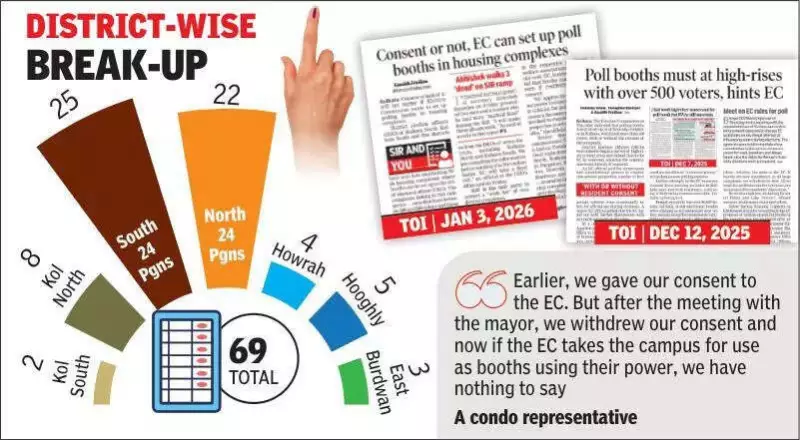
The list details a clear geographical spread. Ten of these buildings are located within two parliamentary constituencies in Kolkata itself—two from the south and eight from the north of the city. The majority, however, are situated in the adjoining neighbourhoods of the Kolkata Metropolitan Area (KMA).
South 24 Parganas district leads with 25 high-rises on the list, followed closely by North 24 Parganas with 22. Other districts contributing to the tally include Howrah (4), Hooghly (5), and East Burdwan (3). Agarwal indicated that this number is provisional and could increase as the process moves forward.

EC's Push and the Challenge of Consent
The drive to identify high-rises began in December when the Election Commission of India (ECI) directed District Election Officers (DEOs) to conduct extensive surveys. The goal was to find housing complexes with over 300 voters where booths could be set up, with lists due by the year's end.
This directive came against a backdrop of practical challenges. Many high-rise managements and resident welfare associations initially refused consent or later withdrew previously granted No Objection Certificates. Officials cited reasons ranging from political pressure to fears of chaos and disruption within their private campuses.
"Many of the flat-owners... later withdrew their consent on the plea that there was political pressure," the report noted. In some cases, associations reversed their agreement after meetings with local political figures, including Kolkata Mayor Firhad Hakim.
Constitutional Powers Invoked
Faced with these withdrawals, the EC has decided to leverage its constitutional authority. An EC official clarified that the commission holds the power to requisition private properties for election purposes, a practice similar to the temporary takeover of private vehicles during polls.
The official firmly stated that the EC would not engage in further discussions with political parties on this matter, underscoring the commission's autonomous role. This move ensures that the identified high-rises will be used as polling stations regardless of subsequent objections from residents.
Ensuring Smooth and Accessible Elections
The finalization of this list marks a critical step in the Election Commission's preparations. By setting up booths in large residential complexes, the EC aims to make voting more accessible for residents and help manage crowd density at traditional polling stations.
While the use of private property has sparked some resistance, the EC's decisive action highlights its commitment to conducting free, fair, and logistically sound elections in West Bengal. The focus now shifts to the operational setup within these 69 high-rises as polling day approaches.