

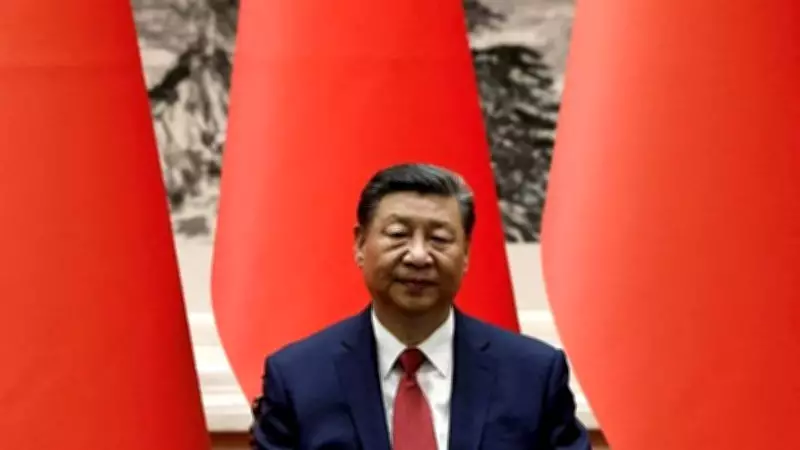
Xi Jinping's Military Purges: A Catalyst for Border Instability?
The recent announcement that China's two most senior generals, Zhang Youxia and Liu Zhenli, are under investigation marks one of the most significant politico-military ruptures in decades. Zhang, as vice chair of the Central Military Commission (CMC), was the senior-most uniformed officer, while Liu oversaw operational planning and war-fighting readiness. Their removal leaves the CMC with only two members: President Xi Jinping and Zhang Shengmin, the military's chief disciplinarian.
This purge has hollowed out the PLA's top leadership to an extent not seen since the Cultural Revolution, following a broader campaign that has ousted two defence ministers, Rocket Force leaders, and dozens of generals. A blistering editorial in the PLA daily accused Zhang and Liu of "seriously undermining the Chairman Responsibility System" and "gravely betraying the trust placed in them by the Party Central Committee."
Three Key Observations on the PLA's Current State
First, Xi Jinping's trust in the PLA's senior leadership has significantly eroded. Zhang was once considered Xi's closest military ally, making this purge damaging to Xi's credibility yet underscoring his absolute power. The Party justifies these actions by claiming that "the deeper one digs, the more is uncovered," highlighting persistent corruption despite Xi's prolonged anti-corruption drive. This reveals the immense challenges China faces in modernizing the PLA into a contemporary fighting force.

Second, the purge does not necessarily undermine the PLA's modernization efforts. Military upgradation is a resilient enterprise involving thousands of officers, advanced technology ecosystems, and massive funding. While disruption at the top can cause uncertainty, delays, and hesitation among officers fearing they might be next, China's military advancement is unlikely to slow down significantly.
Third, the PLA's operational units continue to function, but risks are heightened. The absence of experienced leaders increases the potential for miscommunication, over-correction, and political over-sensitivity. This creates a volatile environment where local commanders may act unpredictably.
Historical Precedents and Short-Term Implications
There is a temptation to assume that a purged PLA will be less assertive. In the short term, Xi may avoid major military operations, such as a kinetic action against Taiwan. However, China's history shows that periods of intense internal instability have often coincided with aggressive military moves—like entering the Korean War in the 1950s, attacking India in 1962, clashing with the USSR in 1969, and invading Vietnam in 1979.
Beyond the immediate future, a PLA staffed with younger, ideologically vetted officers may feel compelled to demonstrate loyalty through action. Shifts in U.S. posture, such as under Donald Trump, could embolden Beijing. China has developed various options, including blockades, disrupting undersea cables, or targeting Taiwan's outlying islands, without resorting to full-scale invasion.
Impact on India and the Border Situation
India should not expect any easing along the Line of Actual Control (LAC). China's border behavior is driven by structural factors like territorial claims, strategic geography, and a desire to keep India off-balance—none of which change due to PLA instability. As the Party demands loyalty through action, a politically insecure PLA might intensify forward deployments, increasing unpredictability.
With the chain of command disrupted, theatre-level officers could become either excessively risk-averse or overly aggressive. History shows that local misjudgments along the border can escalate quickly into larger conflicts. The purge signals a change in personnel rather than a shift in China's strategic ambitions. The Party's message is clear: the next generation of PLA leaders will be "new-era officers nurtured by Xi Jinping Thought," resulting in a more politicized, anxious, and Xi-dependent military.

For India, the takeaway is stark. While the PLA undergoes a political earthquake, the underlying challenges remain. Earthquakes do not make mountains disappear; they only render the terrain more unstable. India must prepare for heightened unpredictability and potential escalations along the border, as China's internal turmoil could manifest in external assertiveness.





