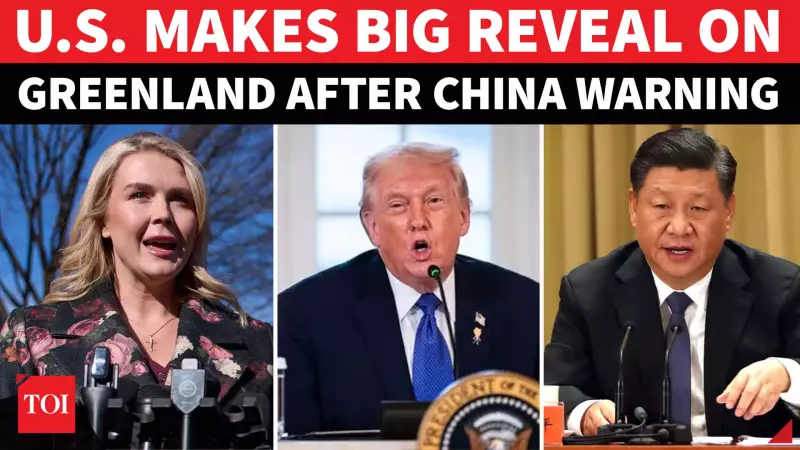
White House Issues Stark Warning About Greenland's Strategic Future
White House Press Secretary Karoline Leavitt made a significant announcement today. She confirmed that President Donald Trump considers the acquisition of Greenland a top strategic priority for the United States. The administration has not set a fixed timeline for this potential move. However, the White House position is clear and direct.
A Direct Warning to Europe and NATO Allies
The argument presented by the White House carries a blunt message. Officials state that if the United States does not take action in Greenland, either China or Russia could step into the vacuum. This development would pose a direct threat to American security interests. It would also endanger European security, according to the administration's assessment.
The Trump administration insists this potential move does not represent expansionism. Instead, officials frame it as a protective measure. They claim U.S. control over Greenland would serve Washington's strategic interests. The administration also argues it would benefit Greenland itself, though specific details about those benefits remain unspecified.

Strategic Calculations in the Arctic Region
This announcement comes amid growing geopolitical competition in the Arctic. Greenland's location gives it significant strategic value. Several nations are increasing their focus on Arctic resources and shipping routes. The White House warning suggests the administration views Greenland as a potential flashpoint.
European nations and NATO allies are likely monitoring this development closely. The statement explicitly connects Greenland's status to European security. This creates a direct link between Arctic strategy and traditional transatlantic security arrangements.
The administration's message attempts to reframe a potential territorial acquisition as a defensive necessity. By presenting China and Russia as alternative actors, the White House seeks to justify proactive American involvement. The success of this diplomatic and strategic argument remains to be seen among international partners.