Vietnam's To Lam Elected President, Centralizing Power in Historic Shift
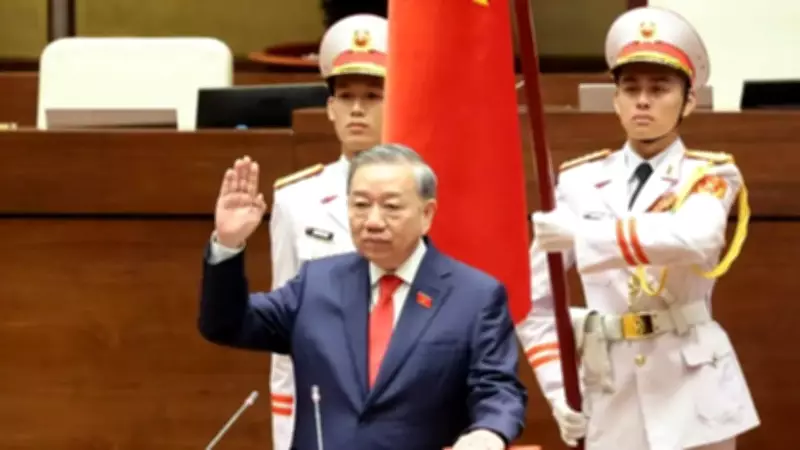
In a landmark decision, Vietnam's Communist Party chief To Lam has been elected president by the National Assembly, marking a significant departure from the nation's traditional collective leadership model. This move effectively centralizes authority under one leader, akin to the system seen in neighboring China under President Xi Jinping.
Unifying Party and State Leadership
To Lam, 68, secured the presidency on Tuesday with unanimous approval from all present deputies, as announced by National Assembly Chairman Tran Thanh Man. This election follows his earlier re-election as the party's general secretary in January, now granting him dual roles that unify leadership of both the party and the state. In a speech after being sworn in, Lam described his new position as a "huge honour" and a "sacred and noble duty."
Analysts note that this consolidation of power has transformed Lam into Vietnam's 'supreme leader,' shifting the country from a consensus-based collective model to a strongman leadership style. Le Hong Hiep, a senior fellow at the Vietnam Studies Programme at Singapore's ISEAS - Yusof Ishak Institute, emphasized that this transition is unprecedented in Vietnamese politics, where power has historically been distributed among senior cadres.

Aggressive Reform Drive and Economic Ambitions
Since ascending to party chief in 2024 after the death of general secretary Nguyen Phu Trong, Lam has implemented sweeping reforms at a rapid pace. His initiatives include:
- Redrawing the national map by combining provinces
- Abolishing eight ministries or agencies
- Cutting nearly 150,000 jobs from the state payroll
- Pushing massive infrastructure projects
Lam has set an ambitious target of 10 percent annual growth for Vietnam, a key Southeast Asian manufacturing hub. He is promoting a "new growth model" designed to accelerate decision-making and unleash the private sector, aiming for double-digit growth over the next five years. Former US ambassador to Vietnam Daniel Kritenbrink observed that Lam's "unprecedented power and influence" have increased the odds of his reform program succeeding, as he now has greater scope to push it forward.
Economic Resilience and Global Challenges
Vietnam, a repressive one-party state, has emerged as a regional economic bright spot, with the Communist Party leveraging rapid growth to bolster its legitimacy. The country of 100 million people demonstrated remarkable resilience in 2025, achieving eight percent growth despite 20 percent tariffs imposed by the US under former President Donald Trump. This growth rate ranks among the fastest in Asia.
However, Vietnam faces significant challenges on the global stage:
- Balancing Relations: Navigating between the United States—its main export market—and China, its largest supplier, remains perilous, especially with US efforts to prevent illegal transshipment of Chinese goods via Vietnam.
- Energy Crisis: The conflict in the Middle East has led to surging fuel prices since US and Israeli strikes on Iran in late February, threatening possible shortages and jeopardizing growth goals. Kritenbrink warned that disruptions could persist for six months to a year even if hostilities cease.
In a speech to the National Assembly, Lam acknowledged "numerous challenges" to world order and international law, stressing that nations implementing strategic reforms and seizing new opportunities will rise and develop.
Political Context and Human Rights Concerns
Unlike present-day China or North Korea, political power in Vietnam has not previously been concentrated in a single paramount leader. Lam is the first individual to secure the top two positions through the party's normal leadership selection processes, rather than stepping in after an officeholder's death. This historic consolidation occurs in a context where the ruling party tolerates little dissent, with Human Rights Watch reporting over 160 critics currently imprisoned.

As Lam embarks on his 2026-2031 presidential term, his centralized authority and reform agenda will be closely watched, with implications for Vietnam's economic trajectory and its role in the complex geopolitics of Southeast Asia.