

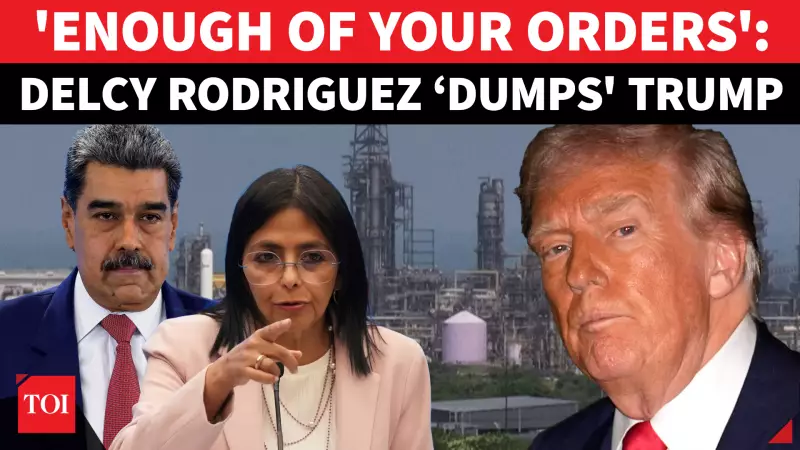
Venezuela's Interim Leader Delcy Rodríguez Defies Trump Administration on Oil Control
Venezuela's interim president Delcy Rodríguez has delivered a sharp warning to Washington, declaring she has had "enough" of U.S. orders just weeks after being backed by the White House following the capture of former leader Nicolás Maduro. Speaking to oil workers in Anzoátegui state, Rodríguez insisted that Venezuela's political future must be decided at home, not dictated by foreign powers.
Standing Firm Against US Demands
Her defiant comments come as the United States continues to apply significant pressure on Caracas, issuing demands that include:
- Cutting ties with China, Iran, Russia, and Cuba
- Partnering exclusively with U.S. companies on oil production
- Implementing political reforms aligned with Washington's interests
Rodríguez, a former Maduro ally, is now walking a delicate political tightrope—balancing Washington's expectations while trying to hold together a deeply divided country facing economic challenges and political polarization.

Venezuela's Oil Wealth at the Center of Geopolitical Tensions
At the heart of the standoff lies Venezuela's vast oil and gas wealth. With the world's largest reserves of extra-heavy crude, Caracas has become central to U.S. energy interests even as fundamental questions over sovereignty, sanctions, and political legitimacy remain unresolved.
The geopolitical implications are significant as Venezuela's strategic position and natural resources make it a focal point in global energy politics. Rodríguez's declaration represents a significant shift in tone from the initial cooperation that followed her assumption of power with White House backing.
Navigating Complex International Relations
The interim president faces the challenging task of managing Venezuela's relationships with multiple global powers simultaneously. While resisting U.S. pressure, she must also consider Venezuela's existing partnerships with countries like China and Russia, which have provided economic support during previous sanctions periods.
Her speech to oil workers emphasized national sovereignty and self-determination, themes that resonate with many Venezuelans who have experienced foreign intervention in their country's affairs. However, this stance creates tension with Washington's expectations for the new leadership in Caracas.
The situation highlights the complex dynamics of international diplomacy where newly installed leaders must balance domestic political realities with external pressures from powerful nations seeking to influence policy directions.






