The political landscape of Venezuela has been plunged into a volatile crisis following the dramatic capture of its leader by American military forces. Thousands of citizens have flooded the streets of Caracas in a massive show of defiance, demanding the immediate release of President Nicolás Maduro and First Lady Cilia Flores.
Streets of Caracas Erupt in Fury
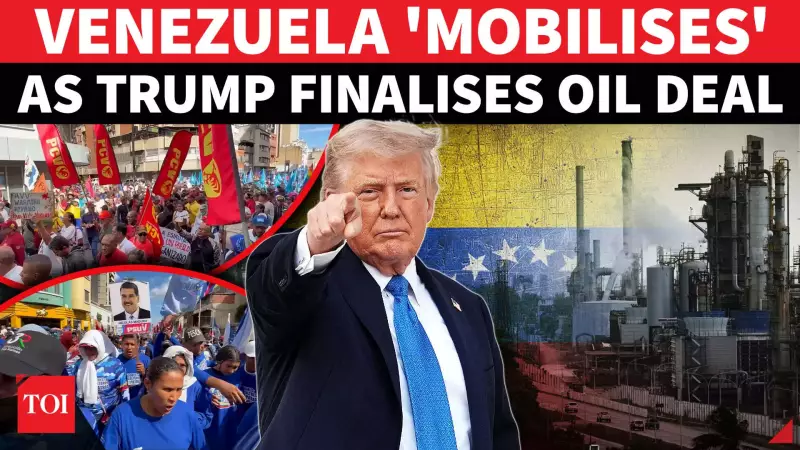
The capital city has become the epicentre of a nationwide upheaval. Since the U.S. military operation on January 3, 2026, kilometres-long marches have snaked through the city. Protesters, waving the flags of the ruling party and holding portraits of Maduro, are chanting slogans against U.S. President Donald Trump. They vehemently label the operation a "kidnapping" rather than a legitimate arrest.
The demonstrations are a coordinated effort, bringing together a broad coalition of ruling-party loyalists, peasant groups, and various political organisations. All have pledged their unwavering resistance and loyalty to Maduro, whom they still recognise as the country's constitutional president. Adding a tense edge to the protests, armed civilian groups known as colectivos have issued warnings, stating they are prepared to defend their territories as public anger continues to simmer across the nation.

Diplomatic Channels Reopen Amidst Chaos
Behind the visible street fury, a quieter but significant diplomatic manoeuvre is underway. In a move that signals a potential seismic shift, the United States has confirmed the arrival of a delegation of diplomats and security officials in Caracas. Their mission is to assess the possibility of reopening the U.S. Embassy, a step considered unthinkable since diplomatic ties were severed back in 2019.
Venezuela's interim President, Delcy Rodríguez, has stated the government's official response will be diplomatic, not military. While accusing Washington of aggression, she extended thanks to nations including Spain, Brazil, Colombia, and Qatar for their international support. This dual approach of street-level resistance and high-level talks places the country at a complex juncture.
Trump's Vision and Venezuela's Crossroads
From Washington, President Trump is pushing forward with a clear vision for Venezuela's future, one intrinsically linked to its vast natural resources. His plan centres on reopening the country's oil sector to U.S. companies, backed by American security guarantees. With Maduro now in U.S. custody, this objective appears closer, yet it is fiercely contested by the mobilised populace and armed groups on the ground.
The situation presents a stark crossroads for the South American nation. The convergence of a captured leader, loyalist masses on the streets, armed factions on high alert, and diplomats tentatively reopening communication channels creates an unpredictable tableau. The critical question remains: Is this the beginning of a diplomatic thaw and a new political chapter, or merely the deceptive calm before a far more dangerous and direct confrontation?