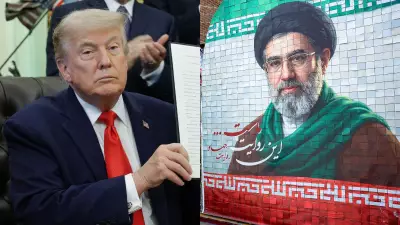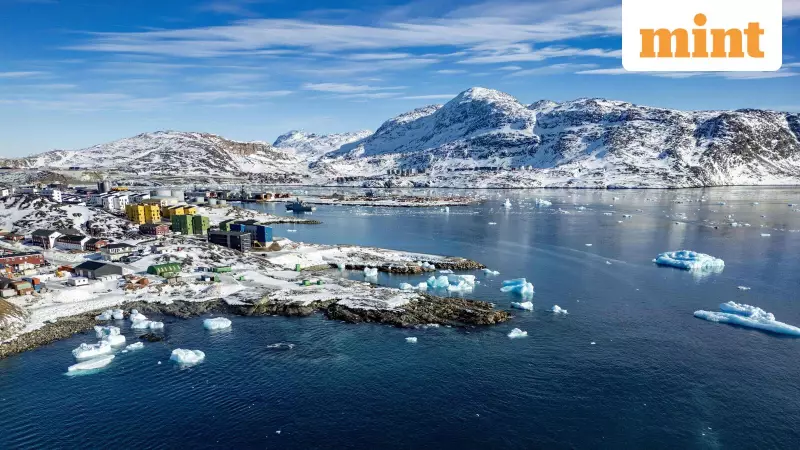
In a move that has sent geopolitical shockwaves, former U.S. President Donald Trump has publicly revived discussions about the United States taking control of Greenland, explicitly stating that military force remains a potential option. This development follows closely on the heels of a major U.S. military operation in Venezuela, underscoring a renewed focus on strategic territories. The Trump administration frames the acquisition of the vast, self-governing Danish territory as a critical national security imperative to counter rivals like Russia and China in the rapidly transforming Arctic.
Why Greenland is a Geopolitical Prize
Greenland's significance is not new. Its strategic value for North American defence was cemented during World War II when the U.S. defended it from Nazi Germany after Denmark's occupation, establishing vital bases. Today, the U.S. Department of Defence operates the Pituffik Space Base in northwestern Greenland, a key site for missile warning and space surveillance under a 1951 defence pact with Denmark.
Geographically, Greenland is a linchpin. It forms part of the critical GIUK (Greenland-Iceland-UK) gap, a naval chokepoint essential for NATO to monitor Russian submarine movements between the Arctic and the Atlantic. White House Press Secretary Karoline Leavitt emphasised this, stating that "acquiring Greenland is a national security priority" for Trump to deter U.S. adversaries.

Climate Change Opens New Arctic Frontiers
The melting Arctic ice, a dire climate crisis, is paradoxically enhancing Greenland's strategic and economic allure. It is opening new shipping routes that could revolutionise global trade. Routes like the Northwest Passage and the potential future Transpolar Sea Route could slash shipping times between Asia and Europe by nearly three weeks compared to the Suez Canal, as noted by former Secretary of State Mike Pompeo in 2019.
These emerging corridors are turning the Arctic into a new arena of great power competition. Russia is looking to export oil and gas to China via the Arctic, while China seeks to reduce its reliance on the vulnerable Strait of Malacca. "Greenland is covered with Russian and Chinese ships all over the place," Trump claimed, arguing the U.S. needs control to ensure its security.
The Rare Earth Elements Bonanza
Beyond its location, Greenland sits atop a treasure trove of mineral resources critical to the modern and green economy. It holds vast deposits of rare earth elements (REEs)—essential for manufacturing electric vehicle magnets, wind turbines, smartphones, and advanced defence systems. The island is home to 25 of the 34 critical raw materials identified by the European Commission.
Major projects like Tanbreez, Kuannersuit, and Sarfartoq, operated by firms like Critical Metals Corp and Energy Transition Minerals, could potentially supply at least 25% of global rare earth demand. The U.S. Geological Survey has also identified significant potential offshore oil and gas reserves. For a U.S. seeking to secure its supply chains for green technology and reduce dependence on China, these resources are a powerful motivator.
Political Realities and Regional Reactions
Greenland's political status adds complexity. While a U.S. colony centuries ago, it became an integral part of Denmark in 1953. A 2009 law granted it expanded self-rule and acknowledged its right to independence—a popular option among Greenlanders. The U.S. formally recognised Danish sovereignty over the island in the early 20th century.
Experts have questioned Trump's aggressive characterisation of rival activity. Ulrik Pram Gad, a security expert at the Danish Institute for International Studies, noted that while Russian and Chinese ships are in the Arctic, "these vessels are too far away to see from Greenland with or without binoculars." The suggestion of a U.S. takeover, whether by purchase or force, is likely to meet fierce diplomatic resistance from Denmark and Greenland itself, while further escalating tensions with Moscow and Beijing in the fragile Arctic region.

The push for Greenland underscores a stark reality: the Arctic, once a frozen frontier, is now a hot zone where climate change, resource hunger, and military strategy are dangerously intertwined, with profound implications for global power dynamics.