In a day marked by significant geopolitical and domestic political developments, the United States made a bold move by seizing a Russian oil tanker, while in India, West Bengal Chief Minister Mamata Banerjee launched a sharp critique against the Enforcement Directorate. Concurrently, reports emerged of the US withdrawing from dozens of international organizations.
US Action Against Russian Oil Tanker
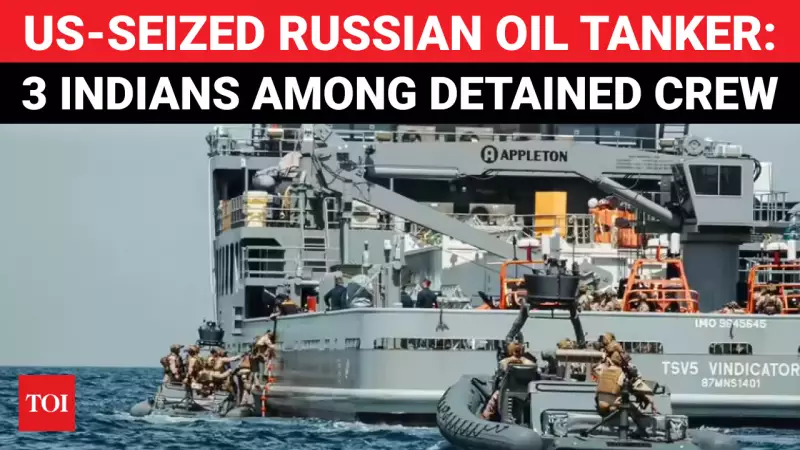
The United States government has executed the seizure of a Russian-flagged oil tanker. This action, reported on January 9, 2026, represents a significant escalation in the ongoing tensions between the two global powers. While specific details regarding the location and the exact legal justification for the seizure were not immediately elaborated in the initial report, such a step is typically linked to enforcing international sanctions or punitive measures.
This move is likely to have immediate repercussions on global energy markets and diplomatic channels. The seizure of a vessel carrying a crucial commodity like oil is a direct and tangible action that goes beyond rhetoric, potentially aiming to curb Russian energy revenues or enforce compliance with international norms.

Mamata Banerjee's Fierce Criticism of ED
On the home front, Trinamool Congress chief and West Bengal Chief Minister Mamata Banerjee strongly condemned the actions of the Enforcement Directorate (ED). The federal agency, responsible for investigating financial crimes, has often been at the center of political controversy, with opposition parties alleging its misuse for political ends.
Banerjee's public slam against the ED underscores the continuing friction between the central government's investigative agencies and certain state-level political administrations. Her criticism adds to the heated political discourse in India, focusing on the autonomy of state governments and the perceived overreach of central agencies.
US Withdrawal from International Bodies
In a parallel development with long-term strategic implications, the United States has reportedly decided to exit 66 international organizations. This mass withdrawal signals a potential shift in America's approach to multilateralism and global governance.
The scope and names of the specific organizations were not listed, but such a sweeping move could encompass bodies related to cultural, scientific, environmental, and economic cooperation. This trend of stepping back from international commitments could create power vacuums and reshape global leadership dynamics, potentially offering other nations, including China and regional blocs, opportunities to expand their influence.
Analysis and Potential Fallout
The convergence of these events paints a picture of a world where major powers are taking assertive, unilateral actions. The US seizure of the tanker is a hard-power tactic, while its exit from international forums represents a soft-power recalibration. For India, the domestic political clash highlighted by Mamata Banerjee's statements remains a key internal issue.
The immediate consequences to watch will include:
- Russia's response to the tanker seizure, which could range from legal challenges to retaliatory measures.
- The impact on global oil supply chains and insurance markets for shipping.
- The specific list of international organizations abandoned by the US and how it affects global problem-solving.
- The political reverberations of Banerjee's criticism within India's opposition landscape.
These developments, all reported on January 9, 2026, highlight the interconnected nature of global diplomacy, energy security, and domestic politics, requiring careful observation in the days to come.