US Announces India's Commitment to Stop Buying Additional Russian Oil
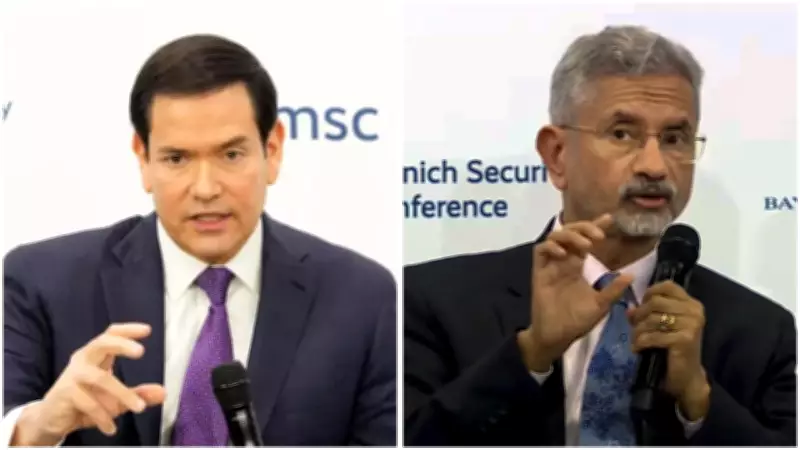
In a significant diplomatic development, US Secretary of State Marco Rubio declared on Saturday that Washington has secured a commitment from India to halt purchases of additional Russian oil. This announcement comes as the United States continues to intensify sanctions against Moscow in response to the ongoing conflict in Ukraine.
Rubio Outlines Sanctions and Diplomatic Efforts at Munich Conference
Speaking at the prestigious Munich Security Conference, Rubio detailed the multifaceted approach being pursued by the United States and its European allies. He emphasized that while diplomatic channels remain open to test Russia's seriousness about ending the war, economic pressure through sanctions continues unabated.
"In our conversations with India, we've gotten their commitment to stop buying additional Russian oil," Rubio stated clearly, outlining one of the key steps in the coordinated Western strategy to maintain pressure on Moscow's economy.

Uncertainty Over Russian Intentions in Ukraine Negotiations
When questioned about whether Russia might be "playing for time" in the ongoing negotiations concerning Ukraine, Rubio acknowledged the uncertainty surrounding Moscow's true intentions. "We don't know if the Russians are serious about ending the war; they say they are – and under what terms they were willing to do it and whether we can find terms that are acceptable to Ukraine that Russia will always agree to," he explained.
However, the Secretary of State stressed that Western measures were proceeding simultaneously with diplomatic efforts. "The United States has imposed additional sanctions on Russia's oil… Europe has taken its set of steps moving forward… Nothing has stopped in the interim. So there's no buying of time here in that regard," Rubio added definitively.
He further clarified that Washington would persist in seeking "a negotiated settlement… so long as the conditions are just and sustainable."
India Reaffirms Strategic Autonomy in Energy Decisions
Rubio's remarks emerge amid ongoing international discussions about India's energy relationships with Russia. At the same Munich conference, External Affairs Minister S. Jaishankar strongly reiterated India's commitment to maintaining strategic autonomy in its foreign policy decisions.
"We are very much wedded to strategic autonomy because it's very much a part of our history and our evolution," Jaishankar asserted when questioned about whether trade understandings with the United States would influence India's oil imports from Russia.
Describing the global oil market as "complex and dynamic," Jaishankar explained that oil companies make procurement decisions based on comprehensive assessments of availability, costs, and risks, ultimately choosing options they believe serve their best interests.
"If the bottom line of your question is, would I remain independent-minded and make my decisions? … yes, it can happen," he stated unequivocally, according to reports from the ANI news agency.
National Interest Guides India's Energy Policy
Earlier this month, Foreign Secretary Vikram Misri emphasized that "national interest" would continue to direct India's energy-related decisions. He clarified that procurement choices are made by oil companies after thorough evaluations of market conditions, logistical considerations, risks, and pricing factors.
"The key drivers of our energy policy are adequate availability, fair pricing and reliability of supply," Misri noted, highlighting that India imports crude oil from dozens of countries worldwide and does not rely on any single source.
He further stressed that protecting the interests of Indian consumers remains an absolute priority, particularly given that India is a net importer of both oil and gas, with energy security for its 1.4 billion citizens being paramount.

Russia Disputes US Claims About Indian Oil Purchases
Meanwhile, Russian Foreign Minister Sergei Lavrov directly challenged the assertions made by US officials regarding India's oil purchasing intentions. Speaking to lawmakers in Moscow on Wednesday, Lavrov questioned the validity of claims that India had agreed to stop buying Russian crude.
"Except for US President Donald Trump, nobody else has declared that India will stop buying Russian oil," Lavrov stated categorically.
He added that he had received no such confirmation from Indian leadership, including Prime Minister Narendra Modi. Lavrov further accused Washington of employing "coercive" measures such as sanctions and tariffs to dissuade nations from purchasing Russian energy resources.
Energy Security Remains Central to Indian Policy
Indian officials have consistently maintained that ensuring energy security for the nation's vast population is of utmost importance. While imports of Russian oil have moderated from their previous peak levels, New Delhi has not formally announced any comprehensive decision to completely halt these purchases.
Rubio's statement at the Munich Security Conference therefore introduces a new dimension to the ongoing diplomatic and economic balancing act. As the United States intensifies sanctions targeting Moscow, India continues to emphasize independent decision-making guided by national interest and strategic autonomy, creating a complex geopolitical landscape where energy security, international relations, and economic considerations intersect.