

India's diplomatic efforts have suffered what the Congress party describes as a severe setback following a report by a United States government panel that credited Pakistan with success in counter-terrorism operations. The development has sparked significant political reactions and raised concerns about India's international standing.
Congress Party's Strong Reaction
The Indian National Congress has strongly criticized the recent report published by the Congressional Research Service (CRS), which operates under the US Congress. The report claimed that Pakistan has achieved success in its counter-terrorism efforts, a statement that has drawn sharp reactions from Indian political circles.
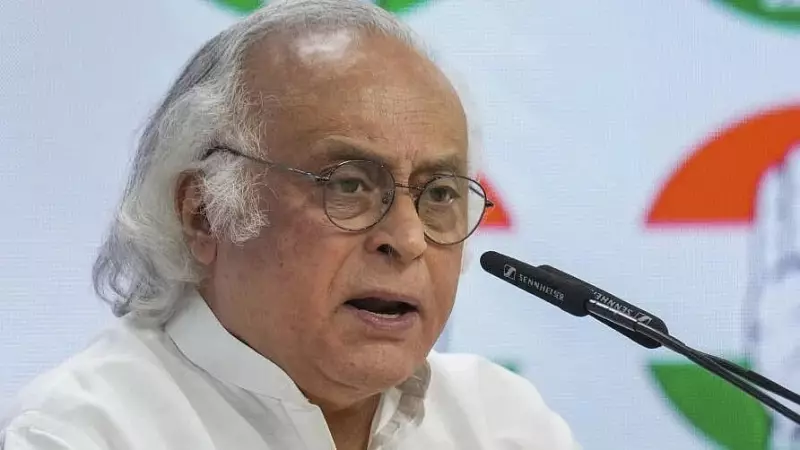
Congress spokesperson Jairam Ramesh expressed deep concern about the implications of this report for India's diplomatic positioning. He emphasized that this development represents a significant diplomatic challenge that requires immediate attention from the Indian government.

Details of the Controversial Report
The CRS report, prepared for members and committees of the US Congress, contained assessments about Pakistan's counter-terrorism operations that have raised eyebrows in New Delhi. The report specifically highlighted what it described as Pakistan's successful efforts in combating terrorist elements within its territory.
This characterization comes at a time when India has consistently maintained that Pakistan continues to harbor terrorist groups and use them as instruments of state policy. The Indian position has been that Pakistan's actions against certain terrorist groups have been selective while others continue to operate freely.
Political Fallout and Implications
The Congress party has used this development to criticize the Narendra Modi government's foreign policy approach. This represents a serious blow to India's diplomatic standing on the global stage, particularly in how terrorism originating from Pakistani soil is perceived internationally.
The timing of the report is particularly significant given India's ongoing efforts to highlight cross-border terrorism in international forums. India has consistently worked to build global consensus against state-sponsored terrorism and has sought to isolate Pakistan diplomatically for its alleged support of terrorist groups.
The CRS report could potentially influence the perception of US lawmakers and policymakers regarding the security situation in South Asia. This development might impact future US policy decisions related to counter-terrorism cooperation in the region and arms sales to Pakistan.
Broader Diplomatic Context
This incident occurs against the backdrop of evolving India-US relations, which have seen significant improvement in recent years. The two countries have strengthened their strategic partnership across multiple domains, including defense, counter-terrorism, and economic cooperation.
However, the CRS report highlights the continuing complexities in the triangular relationship between India, Pakistan, and the United States. Despite closer India-US ties, American assessments of regional security dynamics sometimes diverge from Indian perspectives, creating diplomatic challenges.
The Indian government now faces the task of addressing these perceptions within the US policy establishment while maintaining the momentum in bilateral relations. This may require intensified diplomatic engagement with US counterparts to present India's assessment of regional security threats.
As the situation develops, Indian diplomatic channels are likely to engage with their US counterparts to present India's perspective on counter-terrorism efforts in the region. The outcome of these engagements could have significant implications for future India-US cooperation on security matters and regional stability.






