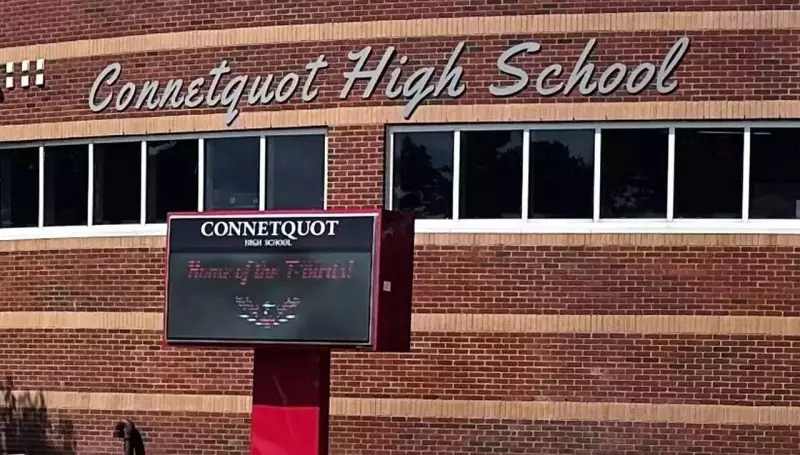
Federal Education Department Mandates Reversal of Mascot Name Change in New York School District
The United States Department of Education has issued a significant directive to a New York school district, ordering it to reverse its decision to rename its longstanding "Thunderbirds" mascot to "T-Birds." This federal intervention comes after a thorough investigation determined that the name change violated crucial federal civil rights legislation, specifically Title VI of the Civil Rights Act of 1964.
Investigation Findings and Civil Rights Violation
The department's Office for Civil Rights conducted an extensive investigation into actions taken by the Connetquot Central School District on Long Island. According to official documentation released on January 22, 2026, federal investigators concluded that the district engaged in discrimination based on race and national origin. The investigation found that the school district abandoned the Native American-derived name solely to comply with a New York state regulation that bans such imagery, rather than based on any independent assessment of harm or discrimination.
Federal officials noted a critical inconsistency in New York's approach: while the state regulation prohibited names and logos based on Native American race or national origin, it permitted other ethnic and racial symbols such as "Dutchmen" or "Huguenots." The Department of Education stated unequivocally that this selective approach constituted unlawful race- and national-origin-based classifications that violated federal civil rights protections.

Background and Timeline of the Mascot Controversy
The Connetquot Central School District had utilized the "Thunderbirds" name for multiple decades, embedding it deeply within school culture and identity. In September 2025, the district's board approved a settlement agreement to change the mascot to "T-Birds" after affirming compliance with the state regulation. However, the federal investigation revealed that this decision was driven exclusively by regulatory pressure rather than educational or community considerations.
The formal investigation began in July 2025 following a complaint alleging differential treatment of Native American mascots based on race, color, or national origin. This complaint raised substantial concerns that warranted comprehensive federal scrutiny under established civil rights law frameworks.
Federal Response and Required Resolution
Assistant Secretary for Civil Rights Kimberly Richey delivered a strong statement regarding the department's findings. According to the official press release, Richey declared that the department had identified the district in violation of federal law for "erasing its Native American heritage to comply with a discriminatory New York state regulation." She emphasized that equal treatment under the law remains "non-negotiable" and that the district must comply with the proposed resolution.
The Office for Civil Rights has presented the district with an opportunity to enter into a voluntary resolution agreement. Under the specific terms of this agreement, the district would be legally required to:
- Readopt the original "Thunderbirds" name for all sports teams
- Restore associated logos and mascot imagery
- Comply fully with federal civil rights standards
Broader Context and Previous Federal Actions
This ruling represents part of a larger federal challenge to New York's policy regarding Native American mascots in public educational institutions. In May 2025, federal authorities made a similar finding that the New York State Education Department and Board of Regents violated Title VI by implementing a statewide ban on Native American mascots. That announcement occurred during a visit by US Secretary of Education Linda McMahon to Massapequa High School, as detailed in a separate departmental press release.

The Education Department has affirmed its commitment to continuing enforcement of federal civil rights protections in education nationwide under the current presidential administration. This case establishes significant precedent regarding how educational institutions must balance state regulations with federal civil rights mandates, particularly concerning cultural representation and heritage preservation.