The Middle East remains on edge as fresh military exchanges involving Iran, Israel and the United States threaten to unravel fragile ceasefire efforts and complicate ongoing diplomatic negotiations aimed at ending months of conflict.
Vance on Iran Talks
US Vice President JD Vance stated on Monday that any future nuclear agreement with Iran must include a rigorous verification mechanism to ensure Tehran fully complies with its commitments. Speaking to Fox News, Vance stressed that the success of any deal depends not on what Iran agrees to on paper, but on whether it follows through in practice. "The president's attitude on this is we have to verify," Vance said. "One of the most important things in determining whether this settlement is a success is not what the Iranians write on the paper, but whether they actually comply with the terms of the agreement." He pointed to shortcomings in the Obama-era nuclear deal, arguing that inadequate inspections allowed concerns about Iran's nuclear ambitions to persist. Vance added that the Trump administration would approach any agreement with caution and maintain strict oversight even after a deal is reached. "Assuming we're ultimately able to make a deal, I don't assume that anybody is acting in good faith," he said. "We're going to accomplish the president's mission, but verify over the long term that the Iranians are keeping their end of the bargain." While acknowledging that securing a durable agreement would be challenging, Vance argued that the administration is negotiating from a position of strength. "It's a tall order, but it's one that the president has put us in a good position to achieve," he said. "The Iranians don't want this war to continue. I think they're coming to the table with serious proposals. We're going to verify them, and if we get this deal, it will be a home-run win for the American people."
Military Escalation
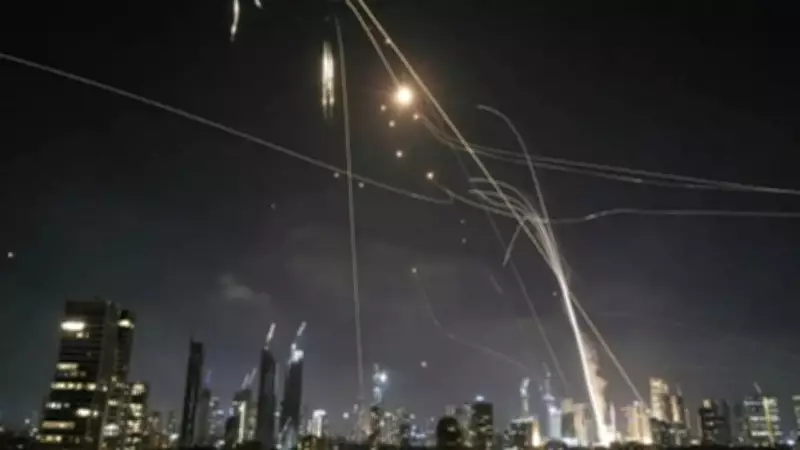
The latest escalation began when Iran launched 11 missiles towards northern Israel, targeting the Ramat David air base near Nazareth. Iran's Revolutionary Guards described the strike as retaliation for Israeli actions in Lebanon, attacks on Iranian interests, and what Tehran called repeated violations of regional ceasefire understandings. Israel said all incoming missiles were intercepted and reported no direct casualties, though several people were injured while rushing to shelters. Air raid sirens sounded across large parts of northern and central Israel, prompting authorities to shut schools nationwide. Israel quickly condemned the attack, with military spokesman Brigadier General Effie Defrin saying Iran had made a "grave mistake" by choosing "the path of terror." Hours later, the Israeli Air Force announced strikes against military targets in western and central Iran, marking the most significant direct Israeli military response since the ceasefire took effect in April. Reports also emerged of explosions near Karaj, west of Tehran, while Iran temporarily closed airspace around Imam Khomeini International Airport following the strikes.

Diplomatic Efforts
The military exchanges come at a sensitive moment for diplomacy. US President Donald Trump has insisted that the latest violence will not derail negotiations with Tehran. Speaking to the Financial Times, Trump said Israeli Prime Minister Benjamin Netanyahu "doesn't call the shots" and claimed a peace agreement remained within reach. According to US and Israeli officials cited by Axios, Trump personally urged Netanyahu not to retaliate further, arguing that Washington was close to securing a breakthrough with Iran. "We are very close to a final deal with Iran," Trump said, adding that another round of military action could jeopardise months of negotiations. At the same time, Trump has maintained a hardline position on key issues. He has ruled out lifting sanctions or unfreezing Iranian assets before an agreement is reached and has stated that the United States intends to eliminate Iran's stockpile of highly enriched uranium regardless of Tehran's consent. These demands remain among the biggest obstacles to a final settlement.

Hezbollah and Lebanon
The conflict continues to extend beyond Iran and Israel. Israel resumed strikes in Beirut's southern suburbs, a Hezbollah stronghold, despite a US-backed truce proposal for Lebanon. Hezbollah has continued attacks on Israeli positions, while Iran has linked its missile strikes on Israel partly to Israeli military operations in Lebanon. Tehran warned that any further action against Iran or Lebanon would be met with a "crushing and comprehensive response." Israeli Defence Minister Israel Katz warned that Israel would continue military operations against Hezbollah in Lebanon and would strike Beirut if the group carried out any attacks on Israeli territory. "Dahiyeh in Beirut will be treated the same as the northern communities," Katz said, referring to the Hezbollah stronghold in southern Beirut. "Any attack on the northern communities will lead to an attack in Dahiyeh. The IDF will continue to operate in Lebanon against the Hezbollah terror organisation," he added. Hezbollah claimed a series of attacks against Israeli military targets in southern Lebanon, including strikes on military vehicles, troop concentrations, and an Israeli drone.
Regional and Global Reactions
Regional diplomacy remains active amid the tensions. Iranian Foreign Minister Abbas Araghchi held calls with counterparts in France, Qatar, the United Kingdom and Türkiye, while also speaking with Pakistani military leadership. Pakistan continues to position itself as a mediator between Washington and Tehran, with Interior Minister Mohsin Naqvi visiting Iran carrying a reported message from Army Chief Field Marshal Asim Munir. Lebanese President Joseph Aoun made a rare direct appeal to Israel's government and people to enter negotiations to end the war. "We are ready, we are willing, we are committed. Are you? If you are, let's sit and talk," Aoun said in an interview with CNN. He warned that a military solution "will never provide you with security and safety." The renewed hostilities have also rattled global markets. Brent crude oil rose above $95 a barrel as investors reacted to fears of wider conflict and possible disruptions to shipping through the Strait of Hormuz, a route that handles around one-fifth of the world's oil trade. Oil prices inched higher in early Tuesday trade as investors weighed the possibility of renewed military action between Iran and Israel. Brent crude futures rose 13 cents, or 0.14%, to $94.38 a barrel, while US West Texas Intermediate (WTI) crude gained 11 cents, or 0.12%, to $91.41 a barrel.
International Reactions
International reactions have continued to grow. Pope Leo has reiterated that the US-Israel military campaign against Iran does not meet the criteria of a "just war" under Catholic teaching. The Palestinian Authority has also condemned attacks targeting Gulf states and called for greater regional stability amid fears that the conflict could spread further. Despite continued diplomatic engagement, missile attacks, Israeli airstrikes, disagreements over sanctions and uranium enrichment, and ongoing fighting in Lebanon have once again placed hopes for a lasting regional settlement under strain.