

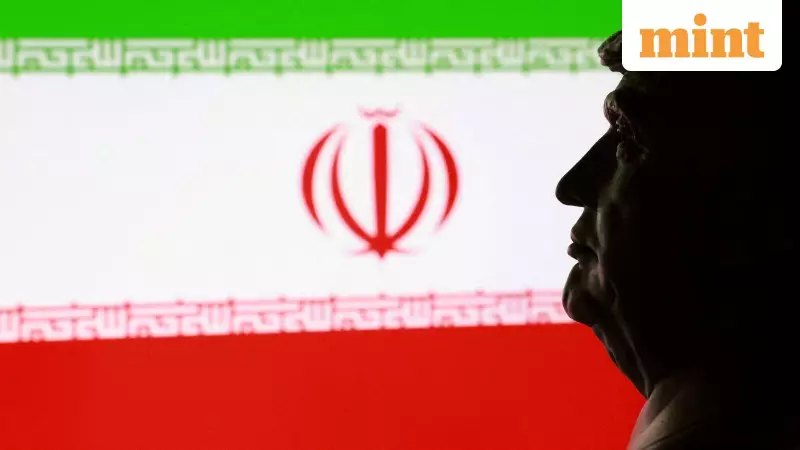
US-Iran Tensions Pose Strategic and Economic Risks for India
President Donald Trump has announced new tariff threats targeting countries that conduct business with Iran. The United States proposes a 25% tariff on any nation trading with Iran. For India, the immediate trade impact appears limited because imports from Iran have already shrunk dramatically. However, India faces significant strategic risks. Its crucial investment in Iran's Chabahar Port could come under severe pressure. Broader regional destabilization, fueled by political unrest in Iran and potential American intervention, presents an even larger challenge.
India's Diminished Trade with Iran
India and Iran share a long history of trade and cultural connections. These ties have frequently been hampered by American sanctions. When the Trump administration reinstated sanctions in 2018, it enforced a strict "zero-oil" policy. India responded by sharply cutting its imports from Iran. The numbers tell a clear story. Imports plummeted from $13.5 billion in the 2019 fiscal year to a mere $440 million by FY25. Oil imports saw an even steeper decline, falling from $12.3 billion to just $70 million.
Experts believe India could eliminate its remaining imports from Iran without suffering serious economic consequences. On the export side, India sends about $1.2 billion worth of goods to Iran annually. This figure represents only 0.3% of India's total exports. A large portion of these exports consists of rice. Analysts suggest India might curtail these shipments to avoid the new 25% tariff, which would be added on top of an existing 50% tariff.

The Chabahar Port: A Strategic Vulnerability
The greater concern for India lies in its strategic investment in the Chabahar port. This long-term project is designed to bypass Pakistan and provide access to Afghanistan and Central Asia. Unfortunately, the port has repeatedly become entangled in US-Iran tensions. In September 2025, the US reimposed sanctions on entities connected to the port. Later, through diplomatic talks, Washington granted a six-month exemption. This temporary reprieve is set to expire in April 2026.
India inaugurated the first phase of the port's modernization, the Shahid Beheshti Terminal, back in 2017. While the terminal has an annual cargo capacity of 8 million tonnes, US threats have slowed its progress. Actual throughput remains around 2.2 million tonnes per year, according to data presented in Parliament.
"India's bilateral trade with Iran is negligible, but port investment is a key pain point," said Abhishek Upadhyay, a senior economist at ICICI Primary Dealership. "It is not clear if such business will fall under the purview of tariffs, given we currently enjoy a temporary exemption from sanctions." He added that India may need to pause any new investments for now and wait for more clarity from the United States.
In 2024, India signed its first long-term overseas port agreement to operate Chabahar in partnership with Iran. Under this deal, Indian Ports Global Ltd (IPGL) committed approximately $120 million for operations. The company also pledged to raise an additional $250 million for surrounding infrastructure. The current uncertainty over US sanctions now places these substantial investments at serious risk.
Regional Destabilization and Oil Market Volatility
The risks extend beyond simple tariff threats. The United States has signaled it might intervene in Iran's internal political unrest. This action raises the specter of broader regional destabilization. A recent post by Trump on Truth Social, telling Iranian protestors that "help is on the way," underscores this very possibility.
"The real risk is if this leads to greater destabilization with increased involvement from larger players in West Asia," explained Sakshi Gupta, principal economist at HDFC Bank.

The region has already experienced volatility. A 12-day war between Israel and Iran in June 2025, which saw US military intervention, heightened risks of major disruptions. During that conflict, oil prices jumped between 13% and 17%. Brent crude reached around $80 per barrel. Shipping costs surged as markets feared the closure of the Strait of Hormuz. Iran controls this vital waterway, through which 20% of the world's oil flows. War risk premiums for cargo ships more than tripled, rising from 0.2% to 0.7% of a ship's value during the conflict.
Iran ranks as the fourth-largest producer within OPEC. Political unrest and greater instability in the region could drastically alter oil supply calculations. Markets had expected an abundance of oil in 2026. According to a Reuters report citing Barclays, the unrest in Iran has already added a geopolitical risk premium of about $3 to $4 per barrel.
Gupta shares a similar perspective. "If all of the Iranian supply disappears from the market—which is an extreme scenario—it completely removes the whole bearish narrative surrounding oil," she stated. The situation remains fluid, with India's strategic and economic interests caught in the middle of escalating US-Iran tensions.





