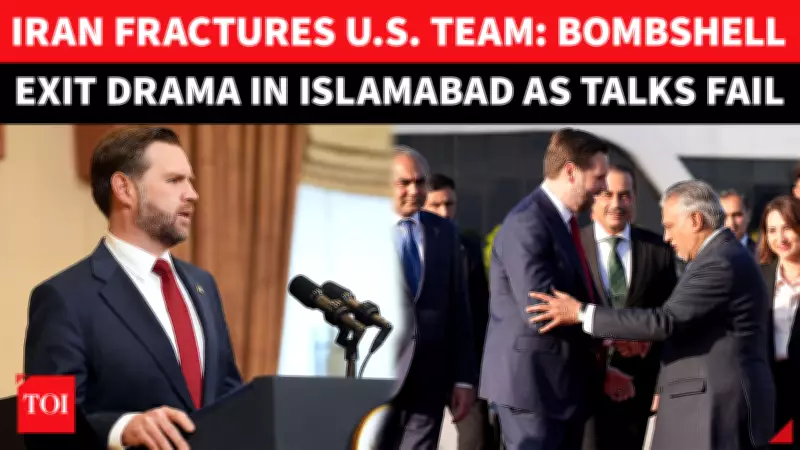
US-Iran Negotiations in Islamabad Conclude Without Breakthrough
The most recent high-stakes diplomatic engagement between the United States and Iran, held in Islamabad, Pakistan, has officially concluded without achieving any substantive agreement or tangible progress. The talks, which were closely monitored by international observers, ended in a stalemate, leaving critical issues unresolved and the future of bilateral relations uncertain.
JD Vance's Early Departure Fuels Speculation
In a development that has captured significant attention, JD Vance, a prominent member of the American negotiating team, departed from Pakistan shortly after the talks concluded. This exit occurred while other senior members of the US delegation remained behind in Islamabad, creating a visible split in the team's movements.
While official statements from both sides have not indicated any internal disagreements or conflicts within the US camp, the optics of this staggered departure have inevitably fueled widespread speculation. Analysts and diplomatic sources are questioning whether this reflects underlying divisions in strategy, cohesion, or approach among the American negotiators.

Context of High-Stakes Diplomacy
The negotiations took place against a backdrop of escalating tensions and complex geopolitical dynamics. Key points of contention, including security concerns in the Strait of Hormuz and broader regional stability issues, were central to the discussions. The absence of a concrete outcome from these talks has only heightened the sense of urgency and uncertainty surrounding US-Iran relations.
It is important to note that staggered departures are not uncommon in diplomatic practice; teams often leave at different times due to logistical, scheduling, or operational reasons. However, in this specific context—given the high-profile nature of the talks and the lack of progress—the early exit of a key figure like Vance has added an extra layer of intrigue and doubt about the internal workings of the US negotiating effort.
Broader Implications and Reactions
The failure to reach an agreement in Islamabad has immediate and potentially far-reaching consequences. It may impact regional security, influence global oil markets, and affect the strategic calculations of other nations in the Middle East. The speculation surrounding team cohesion could also undermine the perceived strength and unity of the US diplomatic position in future engagements.
As both sides regroup and assess their next steps, the international community will be watching closely for any signs of renewed dialogue or further escalation. The outcome of these talks underscores the persistent challenges in US-Iran relations and the delicate balance required in high-level diplomacy.