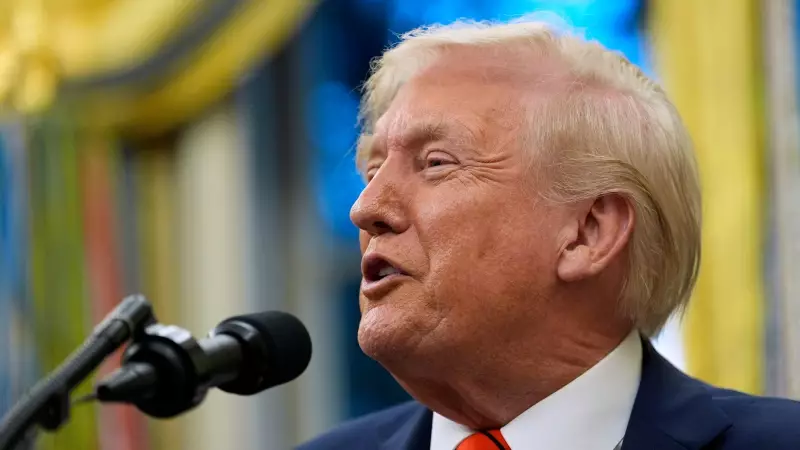
In a sweeping move with far-reaching global consequences, former US President Donald Trump has formally initiated the withdrawal of the United States from 66 international organisations and treaties. The decision, framed as protecting American interests, is set to create massive funding shortfalls and a leadership vacuum in critical global bodies, with analysts predicting China will be the primary beneficiary.
A Strategic Retreat and Its Immediate Fallout
The action was formalised through a presidential memorandum titled ‘Withdrawing the United States from International Organisations, Conventions, and Treaties that Are Contrary to the Interests of the United States’. President Trump directed all executive departments and agencies to implement the withdrawal "as soon as possible." From Delhi's perspective, the immediate impact will be twofold: a severe strain on the funding of these multilateral groupings and a scramble for leadership positions that opposing powers could exploit.
Indian officials assess that Beijing will find these institutions "ripe for picking," given its substantial financial resources, diplomatic leverage, and strategic ambition to shape global norms. This necessitates that India, along with other like-minded democratic nations, works proactively within these forums to safeguard a rules-based international order.

Key Organisations in the Crosshairs
The targeted list is extensive, but several key withdrawals stand out for their profound implications:
World Health Organisation (WHO): The withdrawal process, initiated on January 20, 2025, will be fully effective by January 22, 2026. As the WHO's largest donor, the US exit triggers significant funding cuts. This will directly impair global preparedness for future pandemics, disease surveillance networks, and major health programmes tackling HIV/AIDS, malaria, and other diseases in developing nations, including India.
UNESCO: Following a formal exit notice in July 2025, UNESCO faces a substantial funding gap. The reduced financial support will affect global heritage conservation and educational initiatives worldwide. More critically, the leadership void may allow countries like China to advance their own cultural and educational agendas within the organisation.
Climate Framework: The US has taken the unprecedented step of exiting the foundational treaties of global climate action. While the withdrawal from the Paris Agreement occurred on the first day of Trump's second term, leaving the UN Framework Convention on Climate Change (UNFCCC) delivers a cumulative blow. This move undermines collective efforts to limit global warming to 1.5°C, may encourage other nations to slow their climate actions, and halts US contributions to climate finance for developing countries.
International Solar Alliance (ISA): The exit from this India-headquartered initiative is a particular diplomatic and symbolic setback for New Delhi. It signals a loss of potential investment and expertise aimed at mobilising over $1 trillion for solar energy projects by 2030. While the ISA has diversified its membership and funding since its inception, the US departure represents a notable financial and influential loss.
The Two Baskets of Impact
The 66 bodies affected broadly fall into two major categories, each grappling with imminent challenges.
Climate and Environment Groupings: This basket includes bodies like the Intergovernmental Panel on Climate Change (IPCC), where the US exit marginalises its scientists and risks creating critical data and research gaps. Other affected entities are the International Union for Conservation of Nature (IUCN), the International Renewable Energy Agency (IRENA), and the 24/7 Carbon-Free Energy Compact.

Economic and Human Rights Bodies: The second basket faces equally serious disruptions. A major hit is the OECD Global Tax Deal, where the US declaration that the deal has "no force or effect" creates legal uncertainty and makes it harder to stop corporate profit-shifting globally. Other impacted organisations include the UN Population Fund (UNFPA), UN Women, the UN Conference on Trade and Development (UNCTAD), and key rule-of-law forums like the International Law Commission and the Global Counterterrorism Forum.
The withdrawal from the UN Relief and Works Agency for Palestine Refugees (UNRWA), following a funding suspension in February 2025, reduces capacity for humanitarian aid in Gaza. This places additional pressure on regular contributors like India, albeit within a complex diplomatic landscape concerning Israel.
Ultimately, President Trump's large-scale disengagement marks a pivotal shift in global governance. It forces a realignment where emerging powers, chiefly China, are poised to expand their influence, while traditional allies and middle powers like India must recalibrate their strategies to protect shared interests in an increasingly fragmented multilateral system.