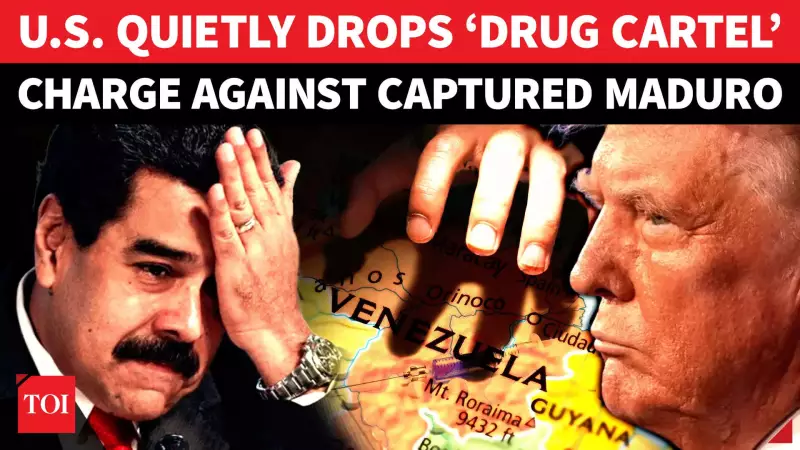
In a significant and quiet reversal, the United States Justice Department has stepped back from a central allegation that formed the cornerstone of the Trump administration's aggressive stance against Venezuelan President Nicolás Maduro. The controversial claim that Maduro led a powerful narcotics trafficking organization, dubbed the "Cartel de los Soles," has been notably softened in a revised legal indictment.
The Shift in Legal Language
The original indictment, which was a key part of the political and legal offensive against the Venezuelan government, explicitly accused Maduro of being the head of a major drug cartel. This charge was instrumental in justifying the dramatic capture of the leader. However, the updated document, filed on or around January 7, 2026, now describes the alleged criminal network differently. It is portrayed not as a traditional, structured cartel, but rather as a "system of corruption fueled by drug money." This subtle but crucial change in terminology carries substantial legal and political weight.
Questions on Strategy and Justification
This legal backtrack is now raising profound and serious questions about the foundational charges that were used to legitimize Maduro's apprehension and the broader US strategy towards Venezuela under the previous administration. Critics of the Trump-era policy are pointing to this development as clear evidence of a troubling gap between political rhetoric and courtroom reality. The allegation of leading a cartel was a powerful tool for demonisation and action; its dilution undermines the original narrative of a narco-state led by a kingpin.

The move suggests that the evidence required to sustain the severe "cartel leader" charge in a court of law may not have been as robust as the political narrative suggested. It forces a re-examination of the events that led to Maduro's capture and the subsequent geopolitical fallout, which included strong reactions from global powers like China and Russia, and heightened tensions across the Americas.
Broader Implications and Reactions
The revision of the indictment does not mean the US has dropped all charges against Maduro, but it significantly alters their character. The surrounding context, as highlighted in related reports, shows a volatile situation. Maduro, after his capture, was described as a "prisoner of war," and his wife appeared bruised in court. His son, Nicolás Maduro Guerra, launched fiery verbal attacks against those he called traitors.
Furthermore, the Trump administration had linked its Venezuela policy to threats against other nations like Iran and had even floated the idea of a second invasion, signaling a deeply confrontational approach in the region. The softening of the core drug charge against Maduro now casts a shadow over the entire legal premise of that aggressive strategy, suggesting it may have been built on an exaggerated or legally unsustainable claim.
In essence, the US Justice Department's quiet amendment has opened a Pandora's box, challenging the validity of the previous administration's most explosive accusations against a sitting head of state and forcing a moment of reckoning for US policy in Venezuela.