

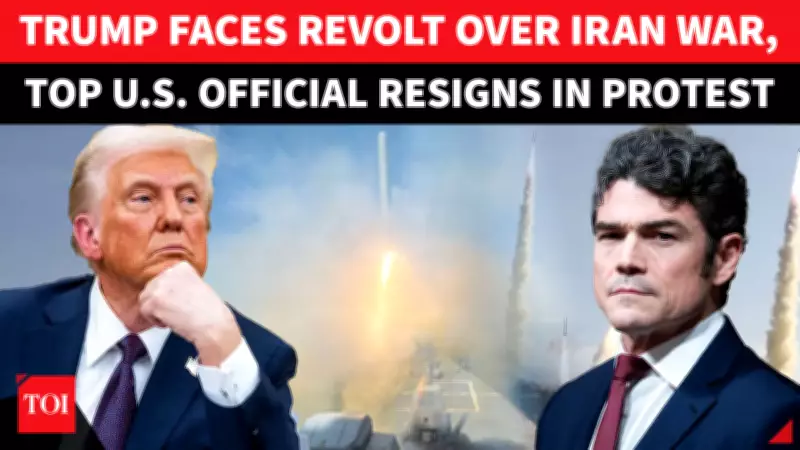
US Counterterrorism Chief Resigns in Protest Over Trump's Iran War Justification
In a dramatic and unprecedented move, Joe Kent, the Director of the National Counterterrorism Center, has tendered his resignation, publicly challenging former President Donald Trump's rationale for the ongoing war in Iran. Kent's departure, announced on March 17, 2026, sends shockwaves through Washington, exposing significant rifts within the administration as military operations intensify.
Conscience Over Compliance: Kent's Stunning Exit
Kent's resignation letter, which has been widely circulated, cites a profound moral conflict. "My conscience does not allow me to continue in this role," he stated, directly contradicting official White House messaging. He argued that Iran did not pose an imminent threat to the United States, a claim that undermines the administration's primary justification for the conflict.
Furthermore, Kent alleged that the decision to go to war was heavily influenced by foreign lobbying pressures, rather than genuine national security concerns. This accusation adds a layer of controversy, suggesting that external interests may have swayed U.S. policy, raising serious ethical and strategic questions.

Deepening Divisions and Strategic Implications
The resignation highlights the deep and growing divisions within Washington as the war escalates. Key implications include:
- Military Strategy Disruption: Kent's exit creates a leadership vacuum at a critical time, potentially impacting U.S. counterterrorism operations and military coordination in the region.
- Internal Dissent: His public defiance signals mounting internal dissent, with other officials possibly harboring similar reservations about the war's legitimacy and objectives.
- Scrutiny Over Decision-Making: The move intensifies scrutiny over the administration's decision-making process, particularly regarding the intelligence assessments that led to the conflict.
As the war progresses, these internal conflicts could complicate long-term strategic planning, making it harder to achieve cohesive policy goals and maintain international alliances.
Broader Context and Regional Escalation
Kent's resignation occurs against a backdrop of heightened regional tensions. Recent events, such as missile strikes and drone attacks involving Iran, Hezbollah, and Israel, underscore the volatile environment. The U.S. involvement has drawn criticism and raised concerns about broader geopolitical stability, with some allies expressing reluctance to fully support the war effort.
This development not only questions the current administration's credibility but also sets a precedent for future conflicts, where ethical considerations may clash with political directives. The fallout from Kent's resignation is likely to reverberate through diplomatic and military circles for months to come.






