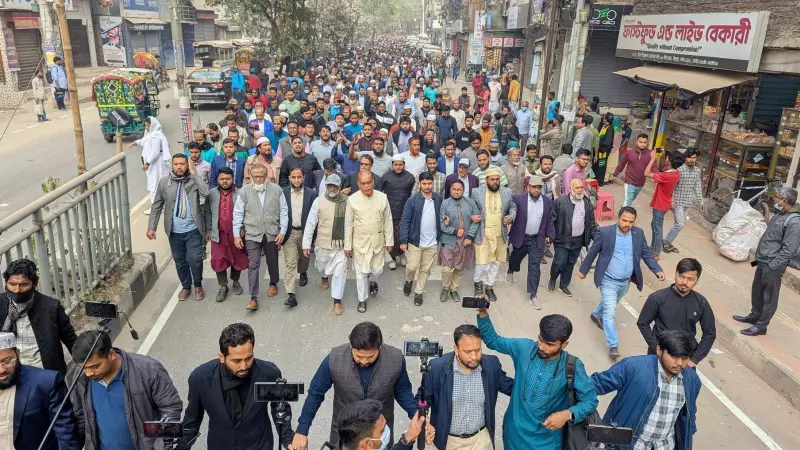
In a development that could significantly reshape regional geopolitics, the United States has reportedly signaled its support for Bangladesh's resurgent Islamist political party, Jamaat-e-Islami. This move, as detailed in a recent report, carries the potential to create a major diplomatic rift with India, a key strategic partner of the US in the Indo-Pacific region.
US Diplomatic Shift Towards Bangladesh's Islamist Opposition
The report indicates a notable shift in Washington's stance towards Bangladeshi politics. Historically, the US has maintained a complex relationship with Bangladesh, balancing concerns over democracy and human rights with strategic interests. However, this apparent backing of Jamaat-e-Islami, a party that has faced criticism and legal challenges within Bangladesh, marks a significant departure and is seen as an attempt to engage with a broader spectrum of the country's political landscape.
Jamaat-e-Islami's Resurgence and Political Context
Jamaat-e-Islami, a fundamentalist Islamist party, has experienced a political resurgence in Bangladesh in recent years. The party, which was banned from contesting elections and saw many of its leaders convicted for war crimes related to the 1971 Liberation War, has been working to rebuild its base and political relevance. This US signal of support could provide the party with enhanced international legitimacy and potentially influence Bangladesh's domestic political dynamics ahead of future electoral cycles.

Potential for a Major Rift with India
The most consequential aspect of this development is its potential to strain relations between the United States and India. India views Bangladesh as a crucial neighbor and has invested heavily in strengthening bilateral ties, particularly under the current government in Dhaka. New Delhi has historically been wary of Islamist political forces in the region, citing concerns over extremism and regional stability.
India's security and strategic interests in Bangladesh are multifaceted, encompassing counter-terrorism cooperation, connectivity projects, and balancing Chinese influence. A US move that is perceived as bolstering an Islamist party could be interpreted in New Delhi as undermining these interests and destabilizing a friendly government.
Broader Implications for Regional Diplomacy
This situation highlights the intricate and often competing diplomatic priorities in South Asia. The United States, while seeking to promote democratic values and engage with diverse political actors, must navigate the sensitivities of its regional partners. For India, which has grown closer to the US through partnerships like the Quad, such actions could test the resilience of the bilateral relationship and force a reassessment of shared strategic goals.
The report suggests that if this US stance translates into concrete policy, it may lead to diplomatic friction, high-level discussions, and a recalibration of alliances in the region. Observers will be closely watching the responses from both New Delhi and Dhaka, as well as any official clarifications from Washington, to gauge the full impact of this geopolitical maneuver.